
Tert-Butylhydroquinone, more widely known as TBHQ, popped up in the scientific world during the twentieth century amid the global hunt for effective food preservatives. Researchers needed a substance that could slow down the relentless progress of oxidation in fatty foods, which leads to rancidity, off-smells, and loss of nutritional value. TBHQ answered that call. Starting in the late 1940s, its adoption spread, helped by the increasing scale and demands of food production. Over time, experts began realizing its value not only in preserving food but also in extending the shelf life of oils, fats, and many packaged goods. The Food and Drug Administration approved its use decades ago, and since then, it has been a familiar, if silent, partner in our pantries and industries.
TBHQ often appears in white or off-white crystalline powder form. It appeals to manufacturers because of its easy blending in fats and oils, as well as its stability under processing conditions. Its biggest role lands in food, acting to shield products like snack foods, butter alternatives, and cooking oils. Still, it has also found a place in resins, varnishes, and even some cosmetics thanks to its antioxidant punch. While the majority of people hardly recognize its name, a small percentage of additive-conscious consumers have grown wary, largely because of debates about food additives and transparency in ingredients.
Chemically, TBHQ counts as a substituted aromatic compound with a benzene ring holding two hydroxyl groups and a tert-butyl group. Its science name is 2-(1,1-dimethylethyl)-1,4-benzenediol. TBHQ melts somewhere between 126°C and 129°C. It resists breaking down in both air and light at room temperature, an essential feature in a preservative. TBHQ dissolves well in oils and fats. This makes it ideal for products that need thorough protection from oxidation throughout their shelf lives.
Food-grade TBHQ must meet purity standards, typically requiring levels above 99%. Regulations strictly cap the amount approved for use, often not more than 0.02% of the total fat or oil content in the final product, as outlined by agencies like the FDA or EFSA. Labels reflect its presence according to the rules of each country: In the US, you’ll spot it as “TBHQ”; in Europe, “E319” serves as its code. These rules intend to keep consumers fully informed, even if most ignore the fine print on packaging. Still, for folks with sensitivities or allergies, clear labelling matters a lot. The industry relies on rigorous testing and batch validation to maintain accuracy and trust.
Manufacturers synthesize TBHQ through a reaction involving hydroquinone and isobutylene, under acidic conditions. This process results in the attachment of the tert-butyl group to the hydroquinone molecule, forming the substance used in preservation. Over the decades, production has shifted toward greener and safer chemical processes, with many companies looking to tighten safety, cut emissions, and limit byproducts. Factories have invested in closed systems and better ventilation to shield workers and neighborhoods from any potentially harmful exposures.
TBHQ stands up to oxygen and heat better than many other phenolic antioxidants. Its structure lets it donate hydrogen atoms to unstable free radicals, which effectively stops the chain reactions that cause fatty acids to break down. Scientists have experimented with derivatives, aiming for even stronger antioxidant properties or better safety profiles. Some research points to novel methods for modifying the molecule, including ways to enhance solubility for particular uses or anchor TBHQ to larger polymers so it can work in specialized industrial materials or coatings.
Other than TBHQ, you’ll sometimes see “E319” on snack packaging or food ingredient lists. Chemists refer to it by its mouthful of a name, 2-(1,1-dimethylethyl)-1,4-benzenediol, which hardly rolls off the tongue in public conversation. Occasionally, labels might say “tertiary butylhydroquinone” or “tert-butylhydroquinone”. In technical catalogs, it crops up under its Chemical Abstracts Service number, 1948-33-0. The variety of names can confuse consumers, but it shows how the same chemical travels between markets.
Debate often stirs around the safety of food additives, yet leading food safety authorities maintain strict controls on allowable levels. Decades of testing demonstrate that, at regulated limits, TBHQ does not leave lasting harms in healthy individuals. Occupational exposure for workers in production plants needs careful monitoring; companies use engineering controls, personal protective equipment, and increasingly digital monitoring systems to minimize risk. Factories maintain detailed logs of airborne concentrations, disposal of any off-spec or waste material, and emergency plans for spills or accidental releases. The key lies in ongoing education and strict compliance with both national and international standards, such as OSHA, REACH, and ISO certifications.
Food applications still make up the lion’s share of TBHQ use. The additive preserves vegetable oils, baked snacks, frozen foods, instant noodles, and animal fats. Its job is simple: prevent spoilage so that food reaches consumers without the strange flavors or off-smells of oxidation. Paints, varnishes, and adhesives also benefit from TBHQ—these products risk yellowing and degradation over time unless they receive antioxidant protection. Even in cosmetics, TBHQ acts as a stabilizer in formulations where unsaturated oils need to maintain quality during shipping and storage. Looking to the future, pharmaceutical manufacturers experiment with TBHQ in certain medicinal formulations, banking on its ability to stabilize sensitive drug molecules.
Laboratories around the world continue to probe the boundaries of TBHQ. Current research has pivoted toward designing derivatives or alternative molecules with similar or better properties but lower toxicity. Analytical chemists work on refining detection methods in food, targeting higher sensitivity and faster turnaround for quality assurance. Meanwhile, several teams are exploring how TBHQ might serve as a template for novel antioxidants in both food and industry, drawing upon its unique combination of stability and reactivity. Other researchers investigate methods to recycle or reclaim TBHQ after use, driven by both regulatory pressure and environmental sustainability goals.
Academic and regulatory toxicologists haven’t turned a blind eye to TBHQ. They study its effects across a range of animal models and gather epidemiological data. Most findings suggest that, in the amounts allowed by law, TBHQ doesn’t build up in the body or provoke carcinogenic or mutagenic effects. Long-term or excessive exposure, as in certain rodent studies, can lead to cell changes and adverse metabolic effects, which has prompted health authorities to set clear limits and call for ongoing scrutiny. A few studies raised concerns about immune function or possible behavioral changes, but these effects didn’t translate to humans at approved exposure levels. Nevertheless, some consumer advocates argue for clearer labeling and independent studies to check for subtler, long-term interactions, particularly as processed food consumption increases worldwide.
Looking ahead, the fate of TBHQ depends on multiple forces. Clean label trends push food makers to explore natural antioxidants like rosemary extract or vitamin E as replacements, though these don’t always match the performance or cost profile of TBHQ. Legislative changes—especially in Europe and parts of Asia—may further restrict use, spurring rapid reformulation in snacks and ready-to-eat meals. At the same time, the chemical industry is refining greener production processes to ease worries around waste and environmental contamination. In academic circles, the hunt for new, more targeted molecular antioxidants continues, inspired in part by the track record and molecular structure of TBHQ itself. Whether TBHQ holds or cedes ground in coming decades, its journey from mid-century innovation to staple of modern food technology offers a lesson on adaptation, risk management, and the ongoing negotiation between shelf life, safety, and transparency.
Walk down the snack aisle, pick up a frozen pizza, or check out that packet of instant noodles. TBHQ pops up more often than most people realize. TBHQ, or tert-butylhydroquinone, keeps many processed foods from going stale by slowing down the oxidation of fats and oils. The science isn’t complicated—a little TBHQ means chips keep their crunch and microwave popcorn won’t taste like cardboard after a few weeks in the cupboard.
Food manufacturers lean hard on shelf life. Distribution takes time, supermarkets store goods for weeks, and nobody wants half their inventory to spoil before it sells. TBHQ comes in handy here. A simple additive, it sits quietly in oil-rich foods like crackers, cookies, fast food, and even certain breakfast cereals. The FDA caps its use at 0.02% of the oil or fat content in a product, so you won’t find wild doses, but TBHQ shows up in so many packaged foods that it’s tough to avoid entirely.
Any preservative going into food sparks a health debate. Ask any nutritionist, they see how many ultra-processed foods fill up the average shopping cart. There’s research from the National Toxicology Program that links high doses of TBHQ in lab animals to potential immune system effects. Some mouse studies hint at links between TBHQ and changes in immune cell activity, though nobody eats as much TBHQ as researchers give lab animals. The FDA and other food safety bodies stick to limits that they say keep exposure well below levels shown to cause harm.
Even so, groups like the Environmental Working Group recommend limiting foods with TBHQ, especially for children. Their reasoning: kids’ developing bodies don’t filter chemicals like adults, and those snack foods stack up fast in a typical child’s day. The World Health Organization keeps an eye on TBHQ, too, but still allows its use under current limits. So long as shoppers rely on packaged food, TBHQ won’t disappear from labels any time soon.
Fresh food always tops processed snacks, but the reality—busy lives and long supply chains—means preservatives fill an important role. Some companies turn to “clean label” solutions like rosemary extract and ascorbic acid. These can work, but they don’t always prevent spoilage as effectively as TBHQ. Switching over means more cost, shorter shelf lives, and sometimes different flavors.
Reading the ingredient list and balancing choices works for anyone worried about additives. Keep highly processed snacks as an occasional thing, lean more on whole foods, and TBHQ becomes less of an issue. The food industry knows consumer pressure makes a difference—big brands have started reducing synthetic antioxidants and finding ways to cut back on TBHQ as shoppers ask for simpler ingredients.
It boils down to what ends up in the grocery cart. Knowing that TBHQ keeps snacks tasting fresh for months lets everyone make better calls about what to eat and what to leave on the shelf. It’s not just about one additive, but the bigger picture of what we eat day after day.
Have you ever turned over a frozen food box and squinted at an ingredient called tert-butylhydroquinone, better known as TBHQ? That name reads like a tongue-twister from a chemistry set, not something that should end up on your dinner table. TBHQ works as a food preservative—stopping oils and fats from going rancid in everything from chips to microwave meals.
I’ve always wondered about ingredients like these. I grew up watching my grandmother toss extra bread in the freezer so it’d stay fresh. Nobody ever sprinkled magic powder over it, yet it kept just fine. So why all these chemical additives today? Food makers say TBHQ keeps snacks flavorful for months, not to mention helping reduce food waste. That’s true; preservatives can help extend a product’s shelf life so we toss out less.
Regulators keep a close eye on TBHQ. The U.S. Food and Drug Administration has set pretty tight limits: no more than 0.02% of the oil or fat in any given food. This shows there's concern about overdoing it. Safety studies done on rats found high doses mess with their livers and immune systems, and in some cases, TBHQ made tumors more common. It’s tough to compare a rat study directly to what people eat, since animal testing doses tend to be much higher. Even so, it gives reason for caution, especially as diets shift and more ultra-processed food takes up shelf space.
European regulators also mark their own boundaries, sometimes setting even stricter limits. A 2021 study out of The Environmental Working Group raised concerns that TBHQ might affect the immune system at doses similar to what the average person might actually eat, thanks to processed foods. That sort of news gets under my skin, because if science can’t be certain after all these years, why gamble with health at all?
Processed snacks now line every checkout lane and kitchen pantry. TBHQ lets these foods stay “fresh” well after real food would have spoiled. That kind of convenience attracts busy families and penny-pinchers. All the same, the question sticks—should an ingredient with long-term question marks end up in everyday foods?
There’s no doubt that keeping food safe for longer without bacteria building up matters. People deserve food that won’t make them sick the day after purchase. The bigger issue pops up with the very foods using TBHQ: chips, frozen pizzas, packaged pastries. For years, nutritionists have linked high intake of these ultra-processed foods to diabetes, heart disease, and other health problems. Are the preservatives to blame? Most doctors point fingers at the added sugar, salt, and fat first, but the question keeps coming back as new research points to possible trouble from these lesser-known additives, too.
Real choices come down to awareness and habits. Reading the fine print on packages gives you control. Opting for simpler snacks—nuts, fresh veggies, fruit—avoids the whole issue. Makers of packaged food could invest more in natural preserving techniques, like vacuum-sealing or using rosemary extract instead of a tricky synthetic like TBHQ. Pushing for clearer labeling laws would help shoppers make informed calls, not just about calories or carbs, but about every ghost in the ingredient list.
Food safety won’t ever be as simple as “good” versus “bad,” but the story of TBHQ shows how complicated these choices have grown. Trust in the food chain only grows stronger when we know exactly what we’re eating and can decide if it truly belongs on our tables.
Dig into a bag of crispy chips or a box of frozen breaded fish, and chances are you’ll spot some unusual words on the ingredient list. Tert-Butylhydroquinone, or TBHQ, pops up pretty often. It’s a synthetic antioxidant that food makers use to lengthen shelf life in processed products. TBHQ slows down the oxidation process, which means oils don’t turn rancid quite as fast. That sounds handy for food companies, but it often sparks questions once folks realize how widespread its use has become.
The grocery store hides TBHQ in more foods than you might expect. Potato chips, crackers, microwave popcorn, and instant noodles use it to keep fats from spoiling. Processed meats like frozen sausage links and chicken nuggets also lean on this additive. Even breakfast cereal and packaged waffles occasionally slip it in, especially if they’re frosted or have nutty swirls. It’s not only snack foods — fast-food chains rely on TBHQ in their frying oils so that french fries taste fresh no matter where you grab them.
Growing up, family road trips meant big drive-through orders and car seats filled with snack food wrappers. Only later did I read about TBHQ. I remember flipping a beef jerky packet, spotting the name, and wondering how something I’d never heard of before could show up in so many different foods.
Facts matter more than just feelings. The FDA considers TBHQ safe when used within certain limits, but emerging studies suggest moderation. Some laboratory research links high doses of TBHQ to health issues in animals, like immune changes and growth problems. Europe takes a stricter approach, with tighter controls on how much gets added to foods. For people with food allergies or sensitivities, TBHQ sometimes prompts headaches or digestive upset. Kids seem especially vulnerable, since many snack foods target younger tastes.
In my own kitchen, I learned to read ingredient lists after friends battled mystery allergies. We all want food that keeps, but nobody wants side effects tacked onto a sandwich cookie. Some researchers encourage more long-term human studies, since the exact impact on our health isn’t always clear-cut.
Consumers have started to pay closer attention. Food companies know this, so today’s shelves carry more options labeled “TBHQ-free.” Sunflower lecithin or mixed tocopherols (vitamin E) step in as natural preservatives in some brands. Traditional methods like vacuum-packing or simply stocking fresher inventory help cut down on preservative usage. Restaurants now highlight “no artificial preservatives” on menus, nudging change slowly.
Change usually comes down to money and awareness. Keeping an eye on ingredient lists costs nothing, and voting with your wallet sends a direct message. I switched out regular microwave popcorn for air-popped kernels and noticed the absence of that hard-to-describe aftertaste. Over time, these choices add up not just for one family but across whole communities.
Understanding what’s hiding in your snack stash empowers you, not just as a consumer but as someone responsible for their own well-being. Food producers respond when folks ask questions and expect transparency. Whether you look for alternative brands or push for clearer labeling, your choices shape what ends up on those supermarket shelves.
Most folks probably haven’t heard of Tert-Butylhydroquinone—TBHQ for short. It pops up in snack foods and oils, quietly extending shelf life by slowing down how fast fats get rancid. Flip a bag of chips or crackers and you’ll likely spot it near the bottom of the ingredients list. TBHQ’s odd name hides the fact it’s a synthetic antioxidant created from hydroquinone, with a bit of a chemical boost. Food makers like how it keeps things tasting fresh, but most people don’t give it a second thought until news about additives stirs up questions.
Concerns about TBHQ come from animal studies and a handful of human reports. High doses in rodents triggered tumors, changes in the liver, harm to DNA, and immune system quirks. Food safety regulators took notice, so agencies like the FDA and EFSA began reviewing all available data. Food doesn’t pack in nearly as much TBHQ as those labs use, so the argument goes that real-world exposure sits far below danger zones. Still, some folks stay wary, especially if they eat a lot of packaged snacks.
Eating foods with TBHQ occasionally probably won’t cause harm for most people. The Acceptable Daily Intake (ADI) set by the FAO/WHO sits at just 0.7 milligrams per kilogram of body weight per day. That means adults eating an average diet would have to down bags of deep-fried snacks daily to tip themselves over safe limits. Most research tracking actual people eating regular amounts hasn’t linked TBHQ to health disasters, though questions remain about subtle effects—especially for kids or anyone with food allergies.
I’ve seen parents double-check every food label after reading warnings online. It pays to bring up these fears with their doctors because allergies or underlying health problems can make people unusually sensitive. A few stories report headaches, vision problems, or rashes after eating foods loaded with TBHQ, but these seem rare and tough to pin down.
Scientists keep looking for long-term health patterns connected to TBHQ. Some recent studies point toward possible immune system impacts and links to hyperactivity in young children. More research needs to prove these links hold up, but the concern keeps cropping up as ultra-processed foods become a daily habit for more of the population. People with asthma or other chemical sensitivities might notice more immediate reactions, though these cases don’t seem widespread in the published literature.
Knowledge helps take the panic out of food debates. People who want to reduce their exposure to any additive can focus on whole foods, check ingredient labels, and pick snacks made with simpler recipes. Cooking more meals at home, reading up on how food is made, and staying plugged into trustworthy sources like the FDA or CDC helps cut through the noise online. Food companies react when shoppers ask questions or demand cleaner recipes, which sometimes nudges brands to drop or swap certain additives.
No chemical on its own makes—or breaks—long-term health. Paying attention to what we eat day after day matters far more than stressing over one listed ingredient. Most importantly, anyone with special health needs or allergies should bring their questions to a doctor who can translate the latest science into practical choices.
Tert-Butylhydroquinone, or TBHQ, protects oils and fats from going rancid. Food manufacturers often use it in snacks, frozen meals, and certain cooking oils. One walk down the grocery store aisle shows how common this antioxidant is—anything that sits on a shelf for months probably has TBHQ on the label. The reason folks put it there? Without TBHQ, foods spoil fast, and no one wants stale chips or off-tasting frozen pizza.
Health experts and regulators keep close tabs on how much TBHQ goes into our food. The U.S. Food and Drug Administration (FDA) caps its use at 0.02% of the oil or fat content in foods. This level sits far below the threshold that would cause problems for most people. The European Food Safety Authority (EFSA) sets a much lower acceptable daily intake—0.7 mg per kilogram of body weight. Their approach considers how food habits vary, and they stick with a conservative dose.
I’ve checked feeds, condiments, microwave popcorn, and more for TBHQ; it pops up everywhere fatty foods show up. Junk food lovers and meal-preppers both eat it, often without realizing. For real-life context, a bag of crackers or a box of breaded fish usually has TBHQ near that 0.02% limit. Industry folks stay close to it, wary of going over and risking fines or recalls. The bottom line: the typical person’s consumption runs way below the daily intake limit, unless they’re eating massive amounts of processed snacks every day.
TBHQ probably won’t hurt anyone in small doses, but large amounts over time raise red flags. Scientists link high levels to possible damaging effects to cells in lab animals. Those animal studies suggest more isn’t always better. There’s also research on its role in allergy development and immune responses, although nothing in humans calls for panic. Regulators play it safe by setting the bar low so kids, pregnant women, and folks with health concerns face little risk.
Food science works best with open communication. Labels list TBHQ, so consumers with concerns can choose differently. Some health-conscious friends avoid artificial preservatives altogether. Others depend on shelf-stable foods for cost and convenience, not pausing to check for TBHQ. The key is getting honest facts into everyone’s hands. Governing agencies constantly revisit these limits based on new science. Fresh studies or complaints from the public can shift regulations up or down.
Better food safety doesn’t have to mean bland food. Companies tweak recipes and ramp up testing to keep within legal bounds. Folks who want fewer preservatives can shop for fresh or “clean label” products. Some snack makers have launched lines that skip TBHQ, relying on vacuum-sealing technology, shorter supply chains, or different natural antioxidants like tocopherols (vitamin E).
My own kitchen? I mix it up—sometimes reading labels, sometimes grabbing what’s on sale, always remembering moderation. Everyone deserves honest info and clear choices on what ends up on their plate.
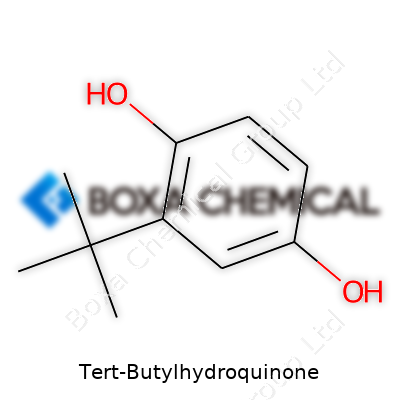
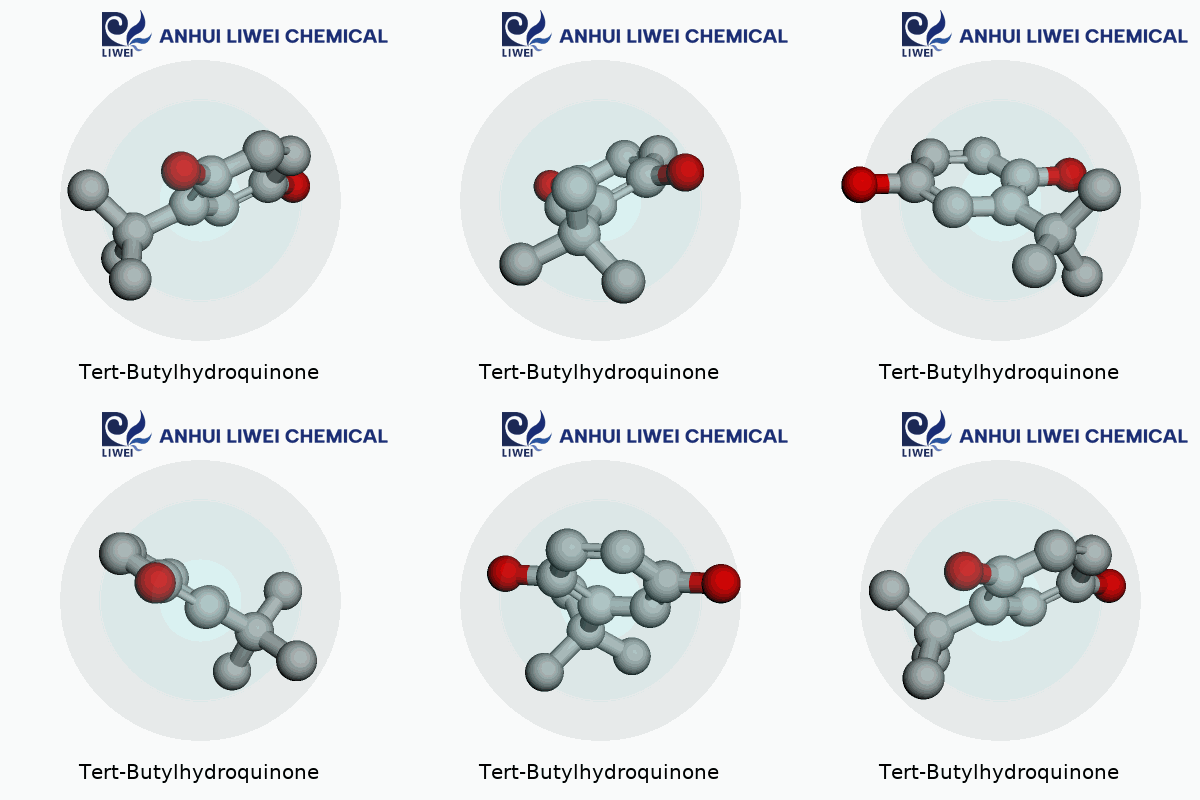
| Names | |
| Preferred IUPAC name | 2-(tert-butyl)benzene-1,4-diol |
| Pronunciation | /ˌtɜːrtˌbjuːtɪl.haɪdrəʊkwɪˈnoʊn/ |
| Identifiers | |
| CAS Number | 1948-33-0 |
| Beilstein Reference | 1362157 |
| ChEBI | CHEBI:53088 |
| ChEMBL | CHEMBL1428 |
| ChemSpider | 54611 |
| DrugBank | DB03793 |
| ECHA InfoCard | 03d2b78b-0f82-46ce-8340-51572ff42c8b |
| EC Number | 204-886-1 |
| Gmelin Reference | 113512 |
| KEGG | C06418 |
| MeSH | D017170 |
| PubChem CID | 16043 |
| RTECS number | WZ4370000 |
| UNII | EK6978SGJY |
| UN number | UN2662 |
| CompTox Dashboard (EPA) | DTXSID6020209 |
| Properties | |
| Chemical formula | C10H14O2 |
| Molar mass | 166.22 g/mol |
| Appearance | White crystalline powder |
| Odor | Odorless |
| Density | 1.05 g/cm³ |
| Solubility in water | Slightly soluble |
| log P | 0.97 |
| Vapor pressure | <1 mmHg (20°C) |
| Acidity (pKa) | 11.48 |
| Basicity (pKb) | 6.12 |
| Magnetic susceptibility (χ) | -59.0·10⁻⁶ cm³/mol |
| Refractive index (nD) | 1.527 |
| Viscosity | Viscous liquid |
| Dipole moment | 2.73 D |
| Thermochemistry | |
| Std molar entropy (S⦵298) | 322.8 J·mol⁻¹·K⁻¹ |
| Std enthalpy of formation (ΔfH⦵298) | -370.8 kJ·mol⁻¹ |
| Std enthalpy of combustion (ΔcH⦵298) | -5394.7 kJ/mol |
| Pharmacology | |
| ATC code | A0160 |
| Hazards | |
| GHS labelling | GHS02, GHS07 |
| Pictograms | GHS02,GHS07 |
| Signal word | Warning |
| Hazard statements | H302, H315, H319, H335 |
| Precautionary statements | P210, P261, P264, P273, P280, P301+P312, P302+P352, P305+P351+P338, P304+P340, P310, P330, P337+P313, P362+P364, P405, P501 |
| Flash point | 113°C |
| Autoignition temperature | 285 °C |
| Lethal dose or concentration | LD50 oral rat 1300 mg/kg |
| LD50 (median dose) | LD50 (median dose): Oral rat LD50 = 1300 mg/kg |
| NIOSH | WN4890000 |
| PEL (Permissible) | No OSHA PEL |
| REL (Recommended) | 1 mg/m³ |
| IDLH (Immediate danger) | Unknown |