
Discovery stories often start with a puzzle, and pyrroloquinoline quinone, or PQQ, entered the scientific world because researchers chasing the mysteries of bacterial enzymes found something they had not seen before. Japanese researchers isolated PQQ in the late 1970s, connecting it to important enzyme systems in bacteria. Soon after, scientists realized these enzymes, named quinoproteins, relied on PQQ as a cofactor, stretching our understanding of how living systems handle electron transfer and metabolism. I remember reading decades-old journals, and the sense of excitement radiates even from the yellowed pages. The lure of a new vitamin haunted many studies, though debate continues about calling PQQ a true vitamin for mammals. This journey from soil bacteria to the human supplement market grabbed the attention of labs worldwide, each chasing the molecule’s role in biology, disease, and potential benefits.
True to its roots in the laboratory, PQQ today shows up on store shelves behind glitzy labels promising memory boosts and energy. Beyond the supplement aisle, the compound shows a versatile profile, acting as a catalyst in redox reactions and serving as a research standard for enzyme studies. Chemical suppliers offer PQQ as a reddish powder or crystalline substance, sold in purity grades targeting both research and industrial uses, from enzyme cofactor assays to nutritional formulations. The commercial story of PQQ unfolds with regulatory approvals and debates about bioactivity. While dietary supplement makers trumpet its mitochondrial benefits, the industrial interest circles back to its natural origins as a bacterial redox cofactor, with researchers exploring synthetic PQQ for greener manufacturing routes.
PQQ stands apart from more familiar cofactors like vitamins C or B12 in both appearance and behavior. Its deep red hue hints at a chemical structure rich in conjugated rings, with a strong UV-Vis absorption that helps spot it even in complex mixtures. PQQ dissolves well in water and polar organic solvents and resists mild heat but loses integrity under strong acids or bases. Its molecular weight clocks in around 330 g/mol, and the molecule presents multiple carboxylate groups, making it both acidic and reactive in biological settings. Its redox potential puts PQQ at the crossroads of key electron transfer processes, and chemists often use this property to track enzyme activity and oxidative reactions.
Most labels cite the chemical as pyrroloquinoline quinone disodium salt for supplements, listing purity, batch numbers, and origin—typically fermentation-derived or synthetic, with certificates of analysis outlining heavy metal limits and microbial content. Leading standards require less than 1% moisture and absence of common allergens. In laboratory supply catalogs, the technical documentation details melting point (over 200°C for pure acid form), solubility in water, and spectroscopic fingerprints such as NMR, UV, and MS profiles. Regulatory scrutiny, especially in markets like the EU and US, forces companies to adopt transparent labeling, highlighting both origin and allergen-free status alongside any claims about bioavailability or safe dosage.
PQQ production started decades ago with simple extraction from bacterial fermentation broths using methylotrophic bacteria such as Methylobacterium extorquens or Hyphomicrobium. Modern methods still lean on fermentation processes, but advances in downstream purification—using chromatography and crystallization—guarantee higher yields and lower impurities. Chemical synthesis routes exist, but they remain complex, yielding lower overall quantities. Fermentation usually starts with culturing high-yield mutant strains under tightly monitored nutrient conditions, followed by multiple filtration and solvent extraction steps. Over the years, improvements in process control—especially better strain selection and controlled pH—helped boost the cost-effectiveness and consistency of PQQ supply.
PQQ’s ability to accept and donate electrons lies at the heart of its usefulness, especially in redox chemistry and bioelectrochemical devices. Modified PQQ derivatives, created through esterification or salt formation, offer better solubility or tailored activity for specific research needs. Chemists regularly tweak its carboxylic acid groups or substituted the quinone core, seeking analogues with altered stability or enzyme-binding properties. In enzyme studies, PQQ reacts as a cofactor, cycling between oxidized and reduced forms in methanol dehydrogenase reactions or related systems. Synthetic chemists often probe these properties, chasing new catalysts or sensor designs that build on PQQ’s redox shuttling behavior.
Throughout its research history, PQQ gathered a long list of names. Technical documents often use pyrroloquinoline quinone or methoxatin. Supplement labels in Asia and the US sometimes say BioPQQ or PQQ disodium salt. Some literature uses the systematic name, 4,5-dihydro-4,5-dioxo-1H-pyrrolo[2,3-f]quinoline-2,7,9-tricarboxylic acid. Most catalogs and patent applications stick to PQQ for simplicity, even if the underlying salt or acid form differs. Knowing these names helps avoid confusion, especially in inter-lab discussions or cross-referencing commercial and academic literature.
In the supplement industry, quality control starts with sourcing—fermentation-derived PQQ usually passes through stringent screening for residual solvents, heavy metals, and microbial contamination. Operators wear protective clothing when handling bulk material; dust controls and local exhaust ventilation remain routine. Lab researchers working with pure PQQ or concentrated solutions use nitrile gloves and safety glasses, as PQQ powder can irritate skin or lungs. Storage recommendations call for sealed, opaque containers out of direct sunlight, since light and heat degrade the molecule. Regulatory bodies such as the FDA or EFSA review safety data and minimum daily tolerances, limiting contamination and requesting batch traceability. Documentation forms an essential part of this chain, with certificate of analysis and safety data sheets following shipments.
Interest in PQQ started with academic curiosity, but its real-world use grew where science and industry meet. Dietary supplements claim to harness its mitochondrial activity, linking PQQ to improved cognitive function, reduced inflammation, and even healthier aging, although reviewers still call for more rigorous clinical data. Elsewhere, researchers rely on PQQ as a laboratory tool to study redox-active enzymes and bio-catalysis. Some electrochemical sensors use PQQ’s redox cycling to signal glucose or methanol levels, offering lower detection limits in complex samples. A handful of companies explore PQQ-catalyzed processes for greener chemical manufacturing, looking for enzymes or artificial systems powered by this hardy cofactor.
Over the past decade, scientists published hundreds of papers on PQQ, most clustered around biochemistry, pharmacology, and neuroscience. Animal studies point toward improved nerve growth factor synthesis and protection against oxidative damage, pushing interest in neurodegenerative disease research. Many international teams now probe the underlying biochemistry—especially how PQQ sustains cellular signaling and mitochondrial biogenesis. Clinical trials in humans remain relatively small, though early results raised hopes for improved memory and reduced markers of inflammation. Academics and industry partners chase scalable synthesis, higher yields, and new analogues, all hoping to expand patents and commercial reach.
Few review articles on PQQ appear without a safety or toxicity section, and with good reason. Early rodent trials reported low toxicity and limited side effects at doses much higher than used in supplements. Human trials, often funded by manufacturers, found only mild, short-lived gastrointestinal complaints at standard doses. That said, regulators advise caution for pregnant women and those with preexisting conditions until larger, independent studies finish. Researchers in food safety and pharmacology watch for long-term effects, organ-specific toxicity, and drug interactions, publishing results that inform recommended intake. The trend in toxicity research favors transparency and erring on the side of smaller, controlled doses, at least until deeper data comes in.
Discussions about PQQ often reflect bigger issues in science and society. Demand for healthier lives, better cognitive performance, and safer manufacturing pushes interest upward. I’ve followed PQQ’s journey from obscure enzyme oddity to supplement superstar, and the hunger for concrete evidence keeps the research pace hot. Scientists dig deeper into its mechanisms, hoping to confirm or refute the bolder health claims. At the same time, engineers and biochemists search for broader applications, especially where PQQ-powered enzymes might replace heavy metals or toxic catalysts. As safety, cost, and data quality improve, expect PQQ’s influence to keep growing, not just in the pill market, but across green chemistry, biosensors, and disease prevention strategies.
PQQ draws attention for its possible effect on mental clarity and sharpness. As people age, brain cells face stress, poor nutrition, and the wear-and-tear of daily life. I’ve noticed that many of my peers look for ways to stay focused at work and engaged with family. Science points to PQQ’s role in helping mitochondria – the powerhouses inside cells – keep up their job. The National Institutes of Health highlights how PQQ seems to protect nerve cells from damage and may trigger growth of new ones. For people standing on the edge of retirement or raising children, a sharper mind has real value. Some small clinical studies show improved attention, memory, and mood in adults who take it regularly.
Many people feel drained. A busy schedule, poor sleep, and stress drag energy levels down. PQQ may help folks feel less wiped out. Studies in Japan have tracked how PQQ works inside the cell to increase energy output. Volunteers in these trials, after supplementing with PQQ for a few weeks, reported more get-up-and-go and better sleep quality. Research teams propose that PQQ helps the body make more mitochondria. I find this interesting since better energy tends to make daily challenges less overwhelming. Even everyday tasks, from walking the dog to carrying groceries, feel easier when cells work well.
Day after day, our bodies get hit by pollution, junk food, and stress. All these factors can build up damaging molecules in our systems. PQQ stands out as a powerful antioxidant, able to soak up these harmful compounds. Studies from University of California teams highlight PQQ’s strength in breaking the chain of oxidative damage, especially in the heart, brain, and liver. For people with family histories of heart disease, the idea of a simple supplement lowering some of these risks holds appeal.
Heart problems cost families sleep and peace of mind. I remember my own grandfather struggling after his heart attack, and keeping an eye out for ways to avoid those same dangers as I get older. PQQ’s effect on heart health lies in its ability to improve cell energy and cut inflammation. Some animal studies show possible protection against damage after heart attack, and other reports suggest it may lower certain markers tied to poor cardiovascular health. More large-scale human trials are still needed, but current results hint at real promise.
Quick fixes rarely solve health problems. Before jumping on the latest supplement trend, I check trusted sources: peer-reviewed journals, national health institutes, and leading universities. PQQ stacks up better than many “miracle” compounds making wild promises, but balance and caution stay important. Doctors and nutritionists advise talking with a healthcare professional before adding new pills or powders. People on medications or with chronic illnesses, in particular, face real risks from stacking too many new compounds without guidance.
At the end of the day, real health springs from habits—balanced meals, regular activity, stress management—and the things we do for our bodies every day. PQQ shows plenty of promise as an extra edge for brain function, energy, and cell protection. I hope more clinical trials keep digging into its full effect, so people can make smarter choices with real results.
Pyrroloquinoline Quinone, or PQQ, shows up more and more in supplement aisles. Companies call it a “longevity nutrient” and claim it supports energy, focus, and even memory. Dr. Google might hand out a long list of impressive studies, but hype does not always match reality. Before adding new pills to a daily routine, especially one spun on big promises, it pays to slow down and dig deeper.
Scientists first discovered PQQ in the 1970s, noticing its role in plant and bacterial health. By the 2010s, researchers ran animal studies claiming improved learning ability, reduced inflammation, and better recovery from nerve injury. In lab mice, mitochondrial function improved—seen as potential help for cells to “age better.” Human studies are rare and often only run for a few weeks. A small clinical trial from Japan once showed a group felt less tired and a bit sharper after eight weeks on PQQ. Blood tests didn’t show anything harmful in those short windows.
PQQ has not turned up major safety scares in published research, but this mostly comes from short-term studies. Few real-world trials have tracked what daily use might do over years, or whether risks change for older people or those dealing with health conditions. Regulators like the FDA let companies sell PQQ as a supplement, but have not declared it “approved” or “proven.” Some reviews, like those at the European Food Safety Authority, confirm that 20 mg daily appears fine over a few months, but caution still rules due to lack of broader data.
No supplement is risk-free. Some users report mild headaches, sleeplessness, or digestive problems. Stacking PQQ with other antioxidant pills sometimes causes problems nobody predicted, since the cocktail mixes in ways not tested. People with kidney problems, especially, need to tread carefully, since the kidneys do the heavy lifting in clearing excess nutrients from the body.
Doctors point out that supplements like PQQ rarely guarantee the bold results marketers suggest. Family physicians and dietitians say most healthy people produce enough PQQ from a varied diet—foods like kiwi, tofu, and green peppers offer trace amounts. Introducing high doses artificially pushes the body into unknown territory.
One nutritionist I trust tells clients considering PQQ to check in with their healthcare provider and track how they feel after starting any supplement. In my own circle, friends who tried PQQ mostly noticed no difference—or, when they did, it was hard to tell if a new pill or just better sleep caused it. There’s no substitute for real food, steady movement, and basic sleep habits.
A person set on taking PQQ can stick to modest doses and avoid combining it with lots of other antioxidant supplements. Tracking side effects in a notebook or phone app helps spot patterns early. If any health conditions exist—especially kidney or liver issues—a chat with a primary care doctor stays essential before starting. Watching for peer-reviewed research from bigger, longer-term human studies also matters; new findings arrive each year.
Claims around PQQ sound exciting, but the science does not outrun common sense. No supplement replaces a balanced diet, reliable sleep, and steady routines. For now, curiosity is good, but caution serves better when exploring PQQ on a daily basis.
Pyrroloquinoline Quinone, known to many as PQQ, has attracted lots of attention for its role in supporting energy and brain function. The body can't make it on its own, so food or supplements stay the main sources. PQQ gets found in foods like kiwi, parsley, green peppers, and tofu, but those amounts tend to be pretty tiny. Supplement bottles at the store usually offer much more.
Walk into any supplement store or browse online, and you'll see most PQQ pills offer dosages between 10 mg and 40 mg per capsule. Research so far backs up these numbers. In studies with real people, 20 mg per day often appears safe and produces the benefits people want, like sharper memory or less fatigue. PQQ’s role in supporting mitochondria, the energy engines in cells, comes with lots of attention. That's led more people to give daily doses a try.
A Japanese study gave 20 mg every day for twelve weeks and reported good tolerance in participants, no big safety problems. Another trial used the same 20 mg in healthy adults, pointing to better cognitive performance. Researchers rarely go much higher than 40 mg, since the body seems able to use small doses well. No study shows bigger doses outperform what folks get from 10 mg to 20 mg.
People often ask whether they should take more PQQ if they’re older, under stress, or looking for a “boost.” Some folks notice subtle changes right away, while others feel nothing for weeks. My own experience—I tested a 20 mg supplement for a month—brought a quiet lift in focus after the second week, with no side effects. Friends who tried smaller 10 mg capsules told the same story: reliable, not dramatic.
Side effects seem rare, but sensible folks stick to tested amounts. Large doses haven’t had enough research, so anyone tempted to experiment should probably talk to a medical professional. Taking more doesn’t always deliver better results with nutrients like PQQ. One study suggests even just 0.2 mg per kilogram of body weight covers daily needs. For most adults, that falls close to the amounts capsules deliver.
Supplements work best on top of a steady diet. Relying on pills for nutrients skips past the benefits of real food—fiber, supporting compounds, and taste. So, even if PQQ brings benefits, it shouldn’t push vegetables or healthy protein off the plate. A diet with veggies, whole grains, lean meat or tofu, and fruits lands the body closer to balance.
Doctors, dietitians, and pharmacists can help sort through options. They know about interactions with prescriptions, health history, or special needs. Transparency matters—good supplement brands test their pills for quality, and any bottle label should list clear amounts.
Staying within the 10 mg to 20 mg range suits most healthy adults based on what data tells us so far. That sweet spot seems to bring possible benefits while avoiding new risks. Everyone’s biology runs differently—signals of trouble mean it’s smart to cut back or pause. The best results start with caution, steady habits, and a little patience.
Walk into most supplement shops and someone will be happy to tell you all about Pyrroloquinoline Quinone, or PQQ. Marketers pitch PQQ as a powerhouse for energy, focus, and even protecting nerves. Looking at animal studies, PQQ seems to help mitochondria—those little energy factories inside our cells. Plenty of people get drawn in by the promise. But not everyone asks, “What could go wrong?”
A decade ago, I started following trendy supplements, curious about both the science and what regular people experience. It didn’t take long to see that side effects sometimes catch up with even the most promising ingredients. Before tossing a new pill in your basket, it helps to know what it might do, both good and bad.
PQQ has been sold over the counter in the US, Japan, and Europe for years. Researchers gave healthy adults up to 20 mg daily for periods ranging from several weeks to as long as six months. Most clinical studies haven’t spotted major “red flag” side effects—no liver toxicity, no notable disruptions to metabolism markers. That’s good, but it’s not the whole story.
Some people report problems shortly after starting PQQ, usually posted across supplement forums or mentioned to their doctors. These include feeling jittery, sleep disruption, headaches, stomach upset, and mild anxiety. Sometimes these problems go away on their own, especially if a person lowers the dose or skips it with food. It’s tough to pin these reactions directly on PQQ since supplements aren’t perfectly regulated, and ingredients can vary.
Claims of no side effects need a reality check in any supplement space. Each person walks around with a mix of genetics, health conditions, and sensitivities. Some folks don’t get any unwanted reactions. Others do, and small studies often miss rare or delayed problems that might show up after a year, not a month.
Animal and cell studies raise questions, too. Some research hints that high doses might change thyroid hormones or blood clotting in mice, but these doses often far exceed what people get from over-the-counter products. Still, it’s a reminder that “natural” doesn’t guarantee harmless. The European Food Safety Authority found no reason for concern at doses up to 20 mg per day for adults, and the FDA has not flagged major risks at standard doses.
Plenty of supplements on the market mix PQQ with B vitamins, common adaptogens, or other energy boosters. That makes it tricky to separate one compound’s effect from another. Brands don’t always source their PQQ from the same producer, raising the chance for contaminants or potency problems. Quality, in my experience, starts with picking brands that share third-party testing results and batch information.
People deserve to know what they’re putting in their bodies. It helps to track how you feel with a new supplement and mention it to your doctor—especially if you manage health conditions (heart, thyroid, or blood problems) or take multiple medicines. If a few users start reporting the same reaction, researchers have a better shot at connecting the dots. Developing national registries for supplement side effects could shine more light on patterns across different populations.
Curiosity about new compounds can fuel breakthroughs, but asking tough questions about safety builds trust. If a product’s benefits look legit in real people and the risks stay low, more folks stand to gain. If not, at least the conversation stays honest—nobody needs empty hype or hidden surprises.
Walk into any health store these days and you'll spot jars of PQQ capsules lined up right next to ginkgo and turmeric. Pyrroloquinoline quinone—one mouthful of a name—has caught the attention of people chasing a sharper mind. Claims about this supplement cover everything from boosting memory to fighting “brain fog.” There’s plenty of excitement, yet sorting fact from hype can feel like unknotting a shoelace with one hand.
Nutritional research moves slowly. Clinical studies on PQQ and human cognition remain pretty thin. Most of what we know comes from animal experiments and a handful of small trials. A study from Japan in 2016 rounded up a group of middle-aged adults and gave them PQQ for 12 weeks. The group showed some improvement in attention and short-term memory. Were the changes life-changing? Not quite. But any bump in recall piques interest when the alternative is forgetting why you walked into a room.
Researchers think PQQ works by supporting mitochondria, the tiny power stations inside our cells. If the brain runs on energy, then better-fueled nerve cells should keep us thinking clearly longer. Some scientists suggest PQQ may lower inflammation, another plus for the mind. The supplement even got called a “longevity vitamin” at one point, though that phrase likely overshot what we know.
People love to tell stories about feeling sharp and awake after starting something new, myself included. I tried PQQ for a few weeks last year during a crunch at work. Hard to say if it shortened the search for car keys, but it didn’t cause any trouble either. Some friends swear their focus improved. Others claimed no effect beyond a lighter wallet. Most folks looking for memory boosts chase that slight edge, but supplements alone rarely move mountains.
Safety matters, too. PQQ hasn’t shown scary side effects at standard doses, but long-term impacts don’t have years of tracking behind them. It makes sense to be careful, especially for anyone taking prescription medicine or managing health issues.
After years of writing about nutrition and aging, there’s a lesson that won’t go away. Good sleep, time outside, and steady social connection build stronger brains than any capsule. Regular exercise triggers new brain cells better than quick-fix solutions. Balanced meals—think leafy greens, berries, fatty fish—feed your brain better than any single supplement. PQQ might offer a boost for some, but the fundamentals always pay off.
None of this means innovation is a waste. Some promising studies make a case for more research on PQQ and similar compounds. Science works best at a crawl, collecting evidence, adapting recommendations, and avoiding wild promises. If you’re tempted to try PQQ, ask your doctor, monitor for any side effects, and treat it as one piece of a bigger puzzle.
Keeping the mind sharp takes commitment, creativity, and some curiosity—but no one has bottled guaranteed memory yet.
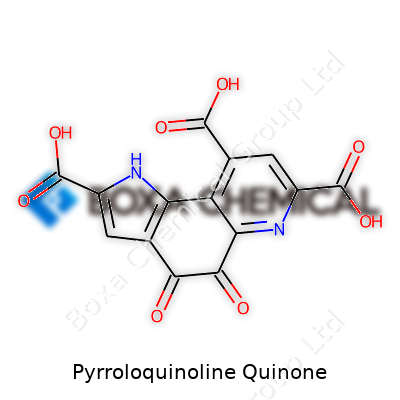
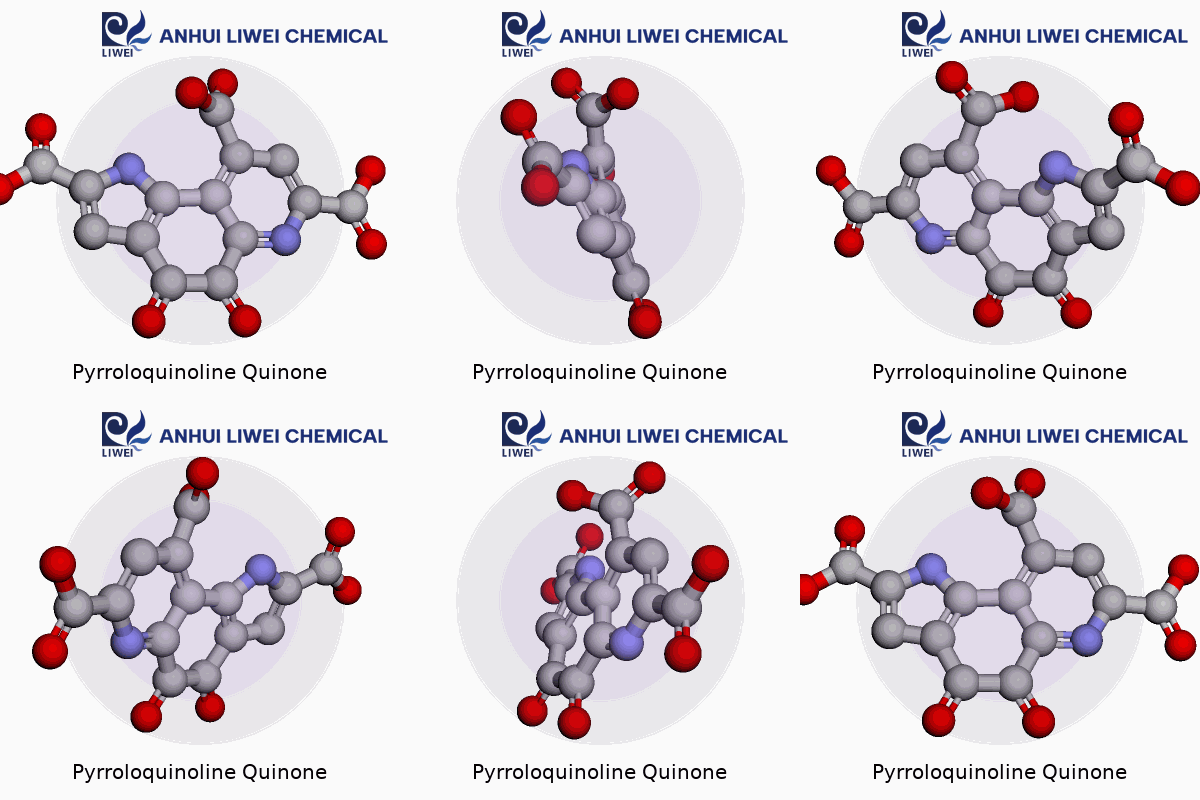
| Names | |
| Preferred IUPAC name | 4,5-dihydro-4,5-dioxo-1H-pyrrolo[2,3-f]quinoline-2,7,9-tricarboxylic acid |
| Pronunciation | /ˌpɪr.oʊ.loʊ.kwɪˈnɒl.iːn kwɪˈnoʊn/ |
| Identifiers | |
| CAS Number | 72909-34-3 |
| Beilstein Reference | 3622462 |
| ChEBI | CHEBI:17904 |
| ChEMBL | CHEMBL1224 |
| ChemSpider | 161359 |
| DrugBank | DB09213 |
| ECHA InfoCard | 100.125.167 |
| EC Number | 1.3.5.2 |
| Gmelin Reference | 112115 |
| KEGG | C06352 |
| MeSH | D000068879 |
| PubChem CID | 400626 |
| RTECS number | UYU82509EE |
| UNII | JX5O9E784W |
| UN number | UN3077 |
| CompTox Dashboard (EPA) | 'DTXSID7043271' |
| Properties | |
| Chemical formula | C14H6N2O8 |
| Molar mass | 330.23 g/mol |
| Appearance | Reddish brown powder |
| Odor | Odorless |
| Density | Density: 1.755 g/cm³ |
| Solubility in water | Soluble in water |
| log P | -2.4 |
| Acidity (pKa) | 4.8 |
| Basicity (pKb) | 13.2 |
| Magnetic susceptibility (χ) | -77.0e-6 cm³/mol |
| Refractive index (nD) | 1.595 |
| Viscosity | Viscous liquid |
| Dipole moment | 5.70 D |
| Thermochemistry | |
| Std molar entropy (S⦵298) | 510.6 J·mol⁻¹·K⁻¹ |
| Pharmacology | |
| ATC code | N06BX14 |
| Hazards | |
| Main hazards | May cause respiratory and skin irritation. |
| GHS labelling | GHS07, GHS08 |
| Pictograms | C1=CC(=C(C=C1C=O)C(=O)N2C=CC(=O)C3=CC(=O)N=C(N32)O)O |
| Signal word | Warning |
| Precautionary statements | P280: Wear protective gloves/protective clothing/eye protection/face protection. |
| Lethal dose or concentration | LD50 > 2000 mg/kg (mouse, oral) |
| LD50 (median dose) | LD50 (median dose): >1000 mg/kg (rat, oral) |
| NIOSH | RN:122628-50-6 |
| PEL (Permissible) | Not established |
| REL (Recommended) | 20 mg per day |
| IDLH (Immediate danger) | Not established |




