
6-Amino-m-cresol didn't pop up overnight. It grew out of chemical exploration in the late 19th and early 20th centuries, back when coal tar chemistry opened the door to new aromatic compounds. Synthetic dyes, medical research, and the search for useful intermediates pushed scientists to look closer at methyl- and amino-substituted phenols. Labs first documented this compound as part of efforts to understand how aminated cresols affected dye formation and drug synthesis. By the 1960s, with organic chemistry in full swing, 6-amino-m-cresol shifted from being just one of many substances to a useful building block in both academic and industrial chemistry.
6-Amino-m-cresol serves as a solid example of how a small aromatic molecule turns into a bridge between simple starting materials and more advanced chemicals. Out in the market, it shows up mainly as an off-white to light-brown crystalline solid, catching interest from companies working on hair dyes, specialty polymers, pharmaceuticals, and pigment synthesis. More than a basic chemical, it sits in that space where value gets added through transformation, not through flashy end-use itself, but through what it unlocks down the line.
With a molecular formula of C7H9NO and a molar mass around 123.15 g/mol, 6-amino-m-cresol exists as a crystalline powder. It melts easily at about 105°C to 108°C. Solubility lands in water and polar organic solvents, like ethanol and acetone, while it resists dissolution in non-polar liquids. The amino and methyl groups create a higher reactivity compared to plain phenol; the molecule tends to take part in substitution and coupling reactions under mild conditions. Handling it in bulk, that faint phenolic smell stands out. In storage, it likes to stay dry and away from strong oxidizers.
Industry buyers expect clear labeling that shows purity (often 98% minimum by GC), melting range, water content, and trace metals. Providers typically guarantee content by HPLC or GC, with clear reference to batch, packaging date, and recommended storage. Packing usually means sealed drums or moisture-barrier bags. For anyone working with food contact or personal care, a Certificate of Analysis and safety data report come with each consignment. Any ingredient used in dyes and drugs pushes suppliers toward higher standards for traceability, especially as downstream industries demand tighter compliance.
Production most often takes the route of nitrating m-cresol to give 6-nitro-m-cresol, then reducing the nitro group to an amino function. Iron powder and hydrochloric acid carry out the reduction in a straight-up batch reaction, although hydrogenation over palladium works for purists aiming for cleaner product. Process engineers tinker with solvent choice and temperature to favor the 6-position selectivity. Yield hangs around 70-85%. Purification means recrystallization or careful distillation under vacuum, which removes most color bodies and trace metal contaminants.
With both amino and hydroxyl groups on the aromatic ring, this molecule becomes a flexible seat for further chemistry. Amino groups open routes for diazotization, helping make azo dyes or other functional intermediates. The phenolic hydroxyl can undergo etherification, esterification, and coupling with halides. Methyl substituents tweak the reactivity, steering substitutions toward ortho- or para-positions relative to the existing groups. For manufacturers building more complex structures, this compound offers a reactive core easily dressed up or modified with low-toxicity reagents. Both small-molecule and polymer chemists use it to attach tailored pieces for specific bioactivity or molecular properties.
6-amino-m-cresol pops up in literature and sales sheets under several labels: 6-Amino-3-methylphenol, 2-hydroxy-5-methylaniline, 5-methyl-2-aminophenol, and 2-amino-5-methylphenol. In the dye business, older catalogues sometimes call it EU-19 base or K-23. Regulatory data entries often anchor around its CAS number—2835-98-5. Confusion happens when dealing with overseas imports, so cross-checking these names avoids costly mix-ups.
Working with 6-amino-m-cresol means taking chemical safety seriously. As an aromatic amine and phenol derivative, it carries both irritant and potential toxic risks. Direct skin and eye contact tends to cause burns or allergic response, and inhaling dust brings respiratory trouble. Standard practice calls for gloves, goggles, long sleeves, and a fume hood. Waste disposal runs through incineration or approved chemical treatment, since pouring it down the drain contaminates aquatic systems. Regulatory listings require clear labeling under GHS; SDS information flags its classification as hazardous. Companies following ISO 9001 or GMP-style approaches include full documentation for handling, spill control, and emergency response.
Hair colorants stay the top market for 6-amino-m-cresol, where it acts as a primary intermediate for brown and black dye shades. In Japanese and European brands, this compound gets blended with oxidative and direct dyes to give natural hues and lasting color. It also helps in some pharmaceutical syntheses, either making API precursors or as a coupling agent in drug discovery. Out in the coatings sector, researchers meld it into resins for better UV-absorption. Small-batch pigment lines pull it for innovative color chemistry, while a few niche electronics manufacturers try it for polymer blends with custom electrical properties. University labs keep it on hand for experiments in functional group transformations or structure-activity studies.
Chemists looking for green or efficient synthesis give 6-amino-m-cresol special attention. Research projects adapt the base process, often targeting renewable solvent use or recyclable catalysts. Studies in catalytic hydrogenation explore ways to lower energy input and cut hazardous byproducts. In materials science, modifications on the cresol scaffold encourage new dye molecules with higher stability or tailored absorption. Work continues on making polymer additives from this molecule to build in thermal stability. Pharmaceutical teams press to access novel salts or analogs for use as enzyme inhibitors and CNS-active agents. Market drivers increasingly value low-impact synthesis and lifecycle management, nudging grant funding toward these sustainable efforts.
Early studies raised red flags about the toxicity of aromatic amines, driving modern labs to keep a close eye on safety. Animal data show mild to moderate acute toxicity at high doses, with occupational exposure risks centering on skin sensitization and possible mutagenicity. Environmental toxicology reports point out that phenolic residues affect aquatic organisms—another argument for tight effluent control. Regulatory authorities, including ECHA and US EPA, review new data on carcinogenicity and endocrine disruption potential. Makers and users rely on ongoing toxicity screens to update safe use levels and workplace controls. In the consumer product context, manufacturers stick to tiny concentrations, below thresholds considered likely to cause health problems, following recommendations from expert panels.
6-Amino-m-cresol looks set to stick around wherever chemical inventiveness overlaps with industrial need. Advances in green chemistry push demand for cleaner synthesis and biodegradable derivatives. As colorants shift toward higher purity and broader safety acceptance, this compound will keep feeding innovation for specialty dyes and pigments. The pharmaceutical side may see more functionalized versions breaking new ground on bioactive compounds, especially where methylphenol scaffolds fit into custom APIs. Sustainability and safety take center stage. Researchers reach for renewable feedstocks and seek out processes with smaller waste footprints. Digital and combinatorial chemistry ways help pinpoint untried applications, all while regulatory oversight sharpens. In the lab and on the shop floor, hands-on experience and solid data still matter for making smart decisions about using this chemical safely and responsibly.
You likely haven’t heard anyone drop the term “6-Amino-M-Cresol” at the dinner table, but it touches everyday lives more than most folks realize. This compound, mostly found tucked away in the world of chemical manufacturing, slides into the spotlight as a key ingredient in permanent hair dyes. Scan the ingredients listed on hair color boxes, and you’ll probably find it there, usually under the shadow of bigger industrial names.
I’ve seen firsthand in salons and from stories shared by colorists that changing hair color is a ritual, not just an act of vanity. People use hair dye for self-expression, a fresh start, or sometimes just to cover gray that crept up a little too soon. The chemistry behind this transformation matters. 6-Amino-M-Cresol brings stability and vibrancy to the party, ensuring that the results look natural and last.
This compound plays well with the oxidizing agents barbers and stylists use in their mixing bowls. Its molecular structure reacts predictably with hydrogen peroxide, creating pigments that take to hair in a uniform way. This isn’t just about shades of brown, black, or auburn being possible. Effective dye chemistry also helps hair resist fading from sun, water, and washing, a genuine concern for anyone spending money or time on color.
Digging deeper, you’ll find that the story doesn’t stop with color results. Safety remains a core concern. Over the years, health agencies and researchers scrutinized 6-Amino-M-Cresol and its chemical cousins. The vast majority of testing points to its safe use in the small concentrations approved for cosmetics, as long as manufacturers stick to proper guidelines and users perform the recommended skin patch tests. Regulatory agencies in Europe and the US have chemical safety assessment criteria in place, based on both scientific studies and decades of consumer use. This kind of oversight builds public trust, which matters because consumers want to know they aren’t risking their health when chasing a new look.
Behind those bright new shades, the chemical industry works to ensure consistent quality. If 6-Amino-M-Cresol isn't as pure as required, the resulting dye can behave unpredictably. Impurities sometimes irritate skin or cause allergic reactions, which is why sourcing matters as much as formulation. One solution that makes a difference is regular quality audits of the supply chain. By prioritizing supplier transparency and robust analytical testing, manufacturers maintain the integrity of the final product.
A conversation about hair dye ingredients should also turn to environmental safety. Wastewater left over from manufacturing these chemicals requires careful treatment. Advances in green chemistry, like alternative synthesis or more efficient purification methods, can reduce the environmental footprint. Industry groups and watchdog environmental organizations push for these improvements, highlighting the broader responsibility that comes with cosmetic chemistry.
Consumers increasingly ask questions and demand safer, more sustainable products. Companies meeting this call by investing in research, refining their processes, and educating the public find loyal followings. If you’re thinking about changing your hair color, or working in product development, understanding the story behind these compounds provides a layer of confidence. The real value lies in combining chemical science, strict safety habits, and ongoing transparency along the way.
It’s easy to let a chemical name like 6-Amino-M-Cresol roll off the tongue, but this compound carries real clout in both research labs and industries dealing with dyes and hair coloring. The chemical formula C7H9NO tells part of the story, but behind those letters lies a molecule that shapes everyday products people interact with.
I’ve seen 6-Amino-M-Cresol play a big role in product development meetings for hair dye brands. This isn’t some fringe ingredient. It's a partner in creating vibrant, lasting color—one that doesn’t fade away after a couple of shampoos. Walk through a drugstore aisle and the dye shelf will silently nod to its chemical help. But its influence stretches out to other coloring agents too, including certain textiles and plastics. Medical and scientific research teams sometimes use it as an intermediary in creating more complex molecules. It represents how pure chemistry transforms into tangible utility.
Consumers deserve to know what touches their skin or goes on their hair. Companies must step up and explain what each chemical brings to the table. The safety record for 6-Amino-M-Cresol stacks up fairly well in standard concentrations, though like with any compound, improper handling or excessive dosage can lead to irritation or sensitization. The European Union and other regulatory bodies call the shots on allowable levels, which gives consumers an extra layer of trust. Anyone working with this chemical needs to know that personal protective equipment and careful labeling keep the work environment safe for everyone involved. Facts matter here, not vague reassurance.
Chemists refer to 6-Amino-M-Cresol’s formula, C7H9NO, for good reason. It describes a benzene ring with a methyl group and an amino group attached. That molecular architecture gives this compound the useful reactive properties dye formulators lean on. The amino group loves to interact with oxidizing agents to produce color, while the methyl group tweaks how the molecule fits in with others. I remember being in a university lab seeing the color changes firsthand; understanding the underlying chemistry made the results look far less like magic and more like precise, repeatable science.
Relying on science-backed guidelines beats chasing after the latest trends with little foundation. Companies can step up by not just following the rules but helping to educate consumers on what’s in their products. Transparent supply chains and supply partners who respect safety standards build trust one bottle at a time. As someone who’s handled dozens of ingredients, I find reassurance when a supplier sends not only the chemical but also a detailed safety sheet and real-world data. That’s better than empty promises of “safe” or “natural” without supporting evidence.
6-Amino-M-Cresol serves as another reminder that the public deserves straight answers about chemistry in daily products. Producers and scientists who open doors to questions and walk consumers through facts—not just buzzwords—set a better example. Teaching people what C7H9NO means goes further than just printing the formula on the package. It turns chemistry into something less mysterious and much more relatable, closing the gap between science and everyday use while making sure public health and trust never get sidelined.
This chemical turns up in many hair dye products. It’s one of those ingredients you spot on the back of the box but probably breeze past. It helps adjust the final shade and stability of dyes, giving the end user a reliable color that holds up under regular washing and everyday exposure. Over years working around chemistry labs, I’ve noticed how even trace chemicals can have big effects — for good or bad. With 6-Amino-M-Cresol, the impact reaches a wide pool of consumers using hair dyes at home or in salons.
Researchers take a close look at any chemical that will touch human skin, especially in products used repeatedly. Studies on 6-Amino-M-Cresol show it can irritate the skin, eyes, and airways in high concentrations. Rats given large doses in lab trials developed symptoms like breathing trouble and changes in liver enzymes. These lab results echo what we sometimes see in people allergic to some hair dyes: itching, redness, and swelling that pop up a day or two after dyeing hair.
Manufacturers don’t use huge concentrations in products, though. In consumer hair dye, the level stays low, usually under 2%. Regulatory agencies, such as the European Chemicals Agency, require brands to stick to set safety limits. They review the data on absorption through the skin. Their research shows small doses, for most people, won’t build up or linger in the body. Still, they warn against using a dye with this ingredient if you’ve had reactions in the past.
Salon workers and folks who dye their hair often get more exposure. Wearing gloves and keeping well-ventilated spaces cut down risk, but not everyone follows the best practices. I’ve worked with professionals who said their hands broke out in rashes or itched for days. Once, I saw someone develop severe swelling along the scalp line — a rare reaction but one that points to how personal chemistry plays a big part. Using protective gear and patch testing each time helps catch a problem before it grows.
Kids and people with eczema or sensitive skin usually should avoid chemical dyes. Their skin barrier runs thinner, so irritants sink in deeper and faster. The FDA doesn’t let dyes like this near eyebrows or eyelashes, pointing to a danger for eyes and thin skin nearby.
Patch testing gives you a good chance to spot a problem ingredient before it covers your head. Dab a bit behind the ear or on the inside bend of your arm, then wait two days. No redness or bumps means you’re likely safe. Always wear gloves when mixing or applying dye. Clean up spills right away, and keep windows or a fan running nearby.
Read labels and pick brands that publish their safety data. Companies who test their products thoroughly and respond to allergic reactions tend to handle customer safety better over time.
People love changing their hair color, and 6-Amino-M-Cresol won’t vanish from shelves soon. Choices based on solid information protect both customers and salon workers. Paying attention to how your body reacts matters more than any promise on a box. For those who want peace of mind, plant-based dyes or henna offer color without as much risk.
6-Amino-M-Cresol has carved a space for itself in labs and industry, serving up value for making dyes or as a building block in organic synthesis. Plenty of folks glance past chemicals with complicated names, but the risks are real once you see what happens after years of storing things wrong. I’ve worked around enough storerooms, from cramped school closets to more sophisticated university labs, to have seen careless habits cause problems. Moisture, heat, light, and air can all chip away at chemical quality and safety. If you don’t pay attention, small mistakes snowball into big headaches. Ensuring, for example, that 6-Amino-M-Cresol stays in proper packaging means less worry about safety and more reliability down the road.
It’s easy to think low temperatures matter only for medicine, but plenty of chemicals face trouble once the room warms up. For 6-Amino-M-Cresol, cool and dry goes hand-in-hand with preservation. Direct sunlight and high temperatures speed up breakdown, leaving a degraded product or, even worse, a safety hazard. Standard research points to a storage temperature below 25°C (77°F), away from hot pipes or radiators. That simple precaution can mean the difference between a stable shelf life and a risky mess during handling.
I’ve watched humidity cut down the shelf life of more chemicals than I care to count. 6-Amino-M-Cresol absorbs water from the air, leading to unwanted chemical reactions that change its nature or reduce its effectiveness. It makes sense to store it in an airtight, well-sealed container, preferably lined with a dry, inert gas like nitrogen if you have the supplies. Storing containers in cabinets with low humidity levels adds another layer of safety, especially in climates where the air never seems truly dry.
Light, especially ultraviolet rays, triggers all sorts of changes in many organic compounds. Maybe you notice a color change or, worse, a shift in chemical properties. Each time that happens to 6-Amino-M-Cresol, you lose the certainty needed for research or manufacturing. Opaque containers or storage in dark cabinets make a big difference. Even outside the chemistry world, anyone’s seen what sunlight can do to fabrics or paper left by a window. Chemicals respond the same, so respecting darkness does more than just follow a rule — it protects everyone’s work and health.
Old habits die hard, but labeling every bottle or vial and keeping clear records prevents confusion and mistakes. Labels with purchase date, batch number, and possible expiration save time later and support traceability in accident investigations. I’ve learned that mixing up containers or losing track of age causes far more grief than spending ten minutes with a labeling gun. Checking inventory regularly lets you retire aging stock before it turns into a problem.
Behind every safe chemical store sits someone who cares about details. Training everyone who handles 6-Amino-M-Cresol ensures good storage habits. Simple steps — wearing gloves, checking seals, using safe containers — matter every bit as much as expensive ventilation or alarm systems. Researchers, students, and factory workers all share the same risk if basic steps are skipped, and clear instructions stop a hundred headaches before they start.
Treating chemical storage as more than a box to tick keeps people safe, chemicals pure, and work reliable. 6-Amino-M-Cresol deserves respect, but handling it right rarely feels hard once good systems fall into place. Real safety sticks not because rules are written down, but because smart storage keeps things running smoothly and avoids accidents, both for today’s project and tomorrow’s.
If someone asks about buying 6-Amino-M-Cresol, most people scroll right past without a second thought. It pops up in academic research, the dye industry, and hair color formulations. At first glance, it seems like just another component for labs or factories. The story changes when you try to track it down with a mouse click, only to realize there’s more to it than finding a price tag.
Chemicals like 6-Amino-M-Cresol draw red flags for health and safety officials. I remember a formative encounter early in my science career. A mentor declined my request to order a chemical “because you don’t know what you’re handling yet.” That lesson still echoes. Even researchers well-versed in the field need to respect safety data sheets, local chemical regulations, and storage requirements. Buying online skips those checks. Many sites won’t ship unless the purchaser shows business credentials or research affiliation.
Handling 6-Amino-M-Cresol gets more complicated due to potential toxicity. Studies from the National Institute for Occupational Safety and Health note skin and respiratory irritation risks. In low-ventilation environments, exposure threatens more than just the user; fumes drift. So, restrictions on purchases exist for a reason. Anyone looking to acquire it for genuine scientific work needs to show legitimate purpose, proper lab facilities, and disposal plans.
Plenty of chemical suppliers pop up on search engines, promising to send nearly anything with two-day shipping. But the trusted suppliers—Sigma-Aldrich, Thermo Fisher Scientific, TCI America—expect more than a shipping address. They request credentials, such as proof of institutional affiliation and details of the intended use. The best suppliers ask these questions to keep the buyer safe and discourage misuse. After working in both small and large labs, I’ve seen the gaps that open when someone sidesteps those processes. Products from unknown sources sometimes arrive mislabeled, impure, or substituted with something else entirely.
Counterfeit chemicals have their own risks. A colleague once shared a horror story about a mislabeled reagent. The chain of confusion nearly set their research back by months, not to mention the safety threat. Reputable suppliers not only provide the real thing, but also offer support if anything goes wrong. Their safety sheets and batch certifications help trace a problem to its source quickly.
Legal requirements keep both buyers and sellers honest. U.S. regulations through OSHA MSDS guidelines require suppliers to track sales of hazardous substances. The European chemicals regulation, REACH, works similarly. Suppliers vet buyers, partly to comply with the law, partly to prevent improper handling or illegal use—such as making banned dye formulations or dangerous mixtures.
Anyone hunting for 6-Amino-M-Cresol for home experiments hits a wall early. That’s intentional. Scientific progress relies on trust, but also on boundaries. Growth doesn’t come by making chemicals more available; it comes by putting the right people in charge of using them. If you ever need rare or hazardous substances, it makes sense to go through proper channels and seek expert advice. It’s not only about getting a bottle on your shelf; it’s about making sure the bottle doesn’t become a hazard.

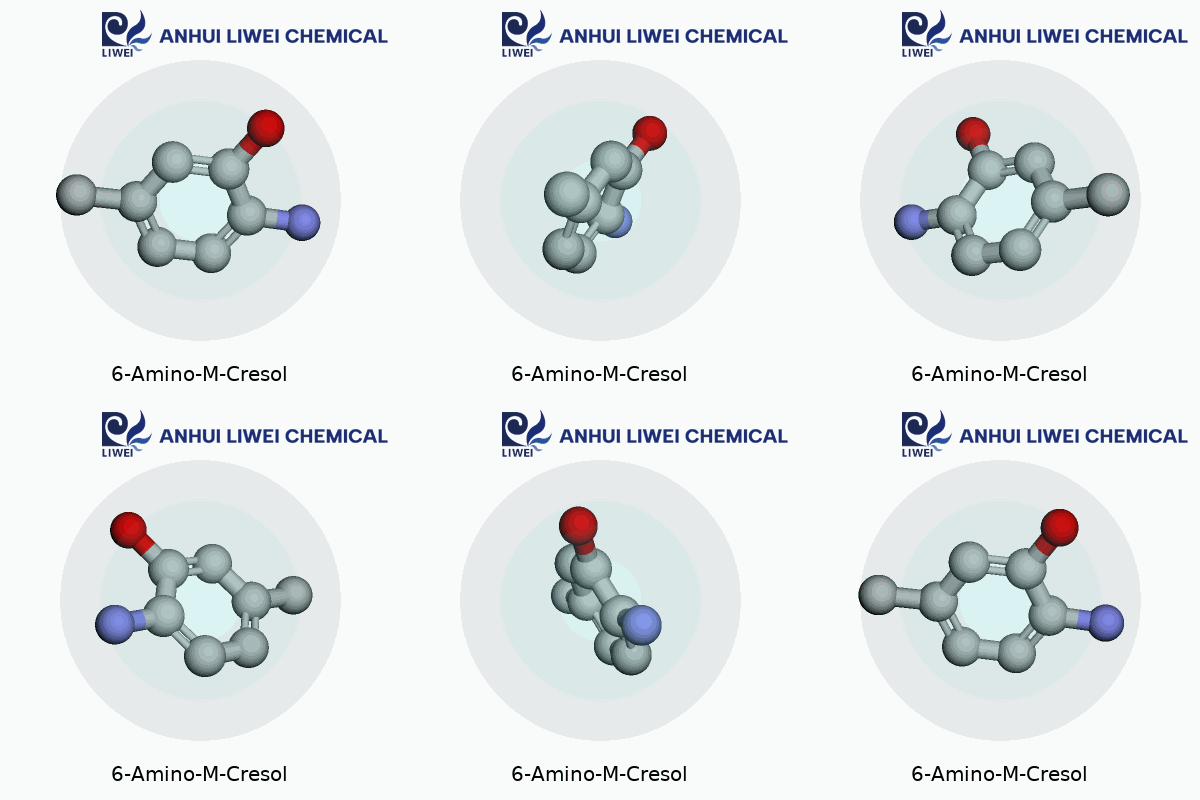
| Names | |
| Preferred IUPAC name | 5-Amino-3-methylphenol |
| Other names |
6-Amino-m-cresol 2-Amino-5-methylphenol 5-Hydroxy-o-toluidine |
| Pronunciation | /sɪks əˈmiːnoʊ ɛm ˈkriːsoʊl/ |
| Identifiers | |
| CAS Number | 2835-99-6 |
| 3D model (JSmol) | `3Dmol.js('6-amino-m-cresol')` |
| Beilstein Reference | 1634858 |
| ChEBI | CHEBI:15941 |
| ChEMBL | CHEMBL156916 |
| ChemSpider | 10887 |
| DrugBank | DB08697 |
| ECHA InfoCard | 100.041.251 |
| EC Number | 205-455-0 |
| Gmelin Reference | 1268589 |
| KEGG | C21137 |
| MeSH | D041254 |
| PubChem CID | 101434 |
| RTECS number | GO9265000 |
| UNII | 8Y9K2C792A |
| UN number | UN2811 |
| CompTox Dashboard (EPA) | urn:chemidplus:2835-98-5 |
| Properties | |
| Chemical formula | C7H9NO |
| Molar mass | 137.18 g/mol |
| Appearance | Light brown to brown solid |
| Odor | Aminic |
| Density | 1.108 g/cm³ |
| Solubility in water | slightly soluble |
| log P | 0.47 |
| Vapor pressure | 0.000072 mmHg at 25°C |
| Acidity (pKa) | pKa = 9.99 |
| Basicity (pKb) | 10.11 |
| Magnetic susceptibility (χ) | -61.0·10⁻⁶ cm³/mol |
| Refractive index (nD) | 1.673 |
| Dipole moment | 3.07 D |
| Thermochemistry | |
| Std molar entropy (S⦵298) | 121.6 J·mol⁻¹·K⁻¹ |
| Std enthalpy of formation (ΔfH⦵298) | -62.7 kJ/mol |
| Std enthalpy of combustion (ΔcH⦵298) | -3934 kJ/mol |
| Hazards | |
| Main hazards | Harmful if swallowed. Causes skin irritation. Causes serious eye irritation. May cause an allergic skin reaction. |
| GHS labelling | GHS02, GHS07 |
| Pictograms | GHS07 |
| Signal word | Warning |
| Hazard statements | H302 + H312 + H332: Harmful if swallowed, in contact with skin or if inhaled. |
| Precautionary statements | Precautionary statements: "P261, P280, P305+P351+P338, P337+P313 |
| Flash point | Flash point: 181.7°C |
| Autoignition temperature | 540°C |
| Lethal dose or concentration | 6,820 mg/kg (rat, oral) |
| LD50 (median dose) | LD50 (median dose): 47 mg/kg (intravenous, mouse) |
| NIOSH | RN0176300 |
| PEL (Permissible) | Not established |
| REL (Recommended) | 0.1 |
| Related compounds | |
| Related compounds |
5-Amino-o-cresol 3-Methyl-5-aminophenol 3-Methylresorcinol Aminophenol |




