
Scientists started exploring phenolic compounds over a century ago, looking for new agents that could tackle both microbes and oxidative processes. 4-Hexylresorcinol didn't burst onto the scene with fanfare but grew out of slow, steady investigation into resorcinol derivatives in the early 1900s. Researchers searched for molecules that balanced potent antimicrobial effects with relatively low toxicity. Tinkering with the resorcinol structure, chemists learned that attaching a six-carbon straight-chain group on the 4-position offered a game-changer. Unlike short-chain homologues, 4-hexyl gave the molecule a better profile for applications in both medicine and industry. As demand for antiseptics, anti-browning agents, and local anesthetics expanded through the twentieth century, 4-Hexylresorcinol moved from the lab bench to pharmacy shelves and food processing lines. Today, its story reflects decades of attempts to turn small chemical tweaks into big practical advantages.
Walk into a dental supply store or check the ingredients on many whitening products and there's a good chance you'll see 4-Hexylresorcinol listed. It’s not just about white smiles. Food producers rely on it to keep seafood looking fresh and maintain color in shrimps and crabs on the way from the dock to the dinner table. Skincare formulators have picked up on its antioxidant kick, counting on 4-Hexylresorcinol to brighten complexions and suppress melanogenesis for people seeking lighter pigmentation. Its wide spectrum doesn't end there; laboratories turn to it for nuanced effects on enzyme activity and as a tool for cell research. No longer limited to any single domain, this is a chemical with roots in multiple practical and commercial fields—sometimes on labels you wouldn't expect.
4-Hexylresorcinol comes as a white to light beige crystalline powder. It carries a faint aromatic scent, something you might notice during formulation. Its chemical formula, C12H18O2, gives it enough heft to be soluble in organic solvents like alcohol and ether while staying only barely soluble in water at room temperature. You won’t run into volatility problems under standard conditions because the melting point usually clocks in around 63-67°C. The molecule’s two hydroxyl groups, separated by the hexyl chain, make it reactive enough for the kind of chemical modifications that industry and research love. Stability tends to be good in closed containers, as long as you avoid strong oxidizing conditions. Its compatibility and handling profile often nudge R&D teams toward including it in both topical and ingestible formulations.
If you’re sourcing the pure product from a chemical supplier, look for certifications under pharmacopoeial standards like USP or JP. Purity needs to approach 98% or higher for most medicinal or food-contact uses. Impurity profiles, such as halogen content and moisture percentage, figure into both labeling and specification sheets. Detailed documentation outlines particle size, residual solvents, and reference to the proper hazard classifications under the Globally Harmonized System (GHS). Directions for storage usually emphasize a cool, dry environment, away from strong acids or bases. In product labeling—especially with food or pharmaceutical goods—regulations from agencies like the FDA or EFSA require clear usage limits and risk statements. Finished goods featuring 4-Hexylresorcinol for skin or mouth contact must declare concentration, batch number, and intended application, ensuring traceability and meeting consumer safety demands.
Industrial-scale synthesis often starts with alkylation of resorcinol, using 1-bromohexane or a similar hexyl halide under alkaline conditions. You need precise control of temperature to keep side products in check. After the initial reaction, solvents remove unreacted starting materials and byproducts. Purification relies on recrystallization, sometimes using ethanol or acetone, to reach high-grade material. Smaller labs can follow similar routes in glassware, sometimes using phase transfer catalysts for higher yields. The key to consistent bulk production rests in monitoring pH, agitation rates, and reaction time. Waste streams holding unreacted halides or phenolic residues must undergo treatment, both for environmental compliance and to recover valuable intermediates. Some newer methods are flirting with green chemistry, seeking to lower energy input and hazardous output, though industry mostly sticks with the tried-and-true because of its predictability.
The structure of 4-Hexylresorcinol leaves the two hydroxyl groups ready for further modification—think ether, ester, or even polymer conjugation. Under mild conditions, enzymatic or chemical methylation shields the active groups, producing derivatives with increased stability for challenging environments. Nitration and sulfonation open doors to water-soluble salts with specialty uses. Researchers working in pharmaceutical chemistry can attach fluorophores or other functional groups for imaging and biosensor development. Oxidative coupling with metal ions, or cross-linking with aldehydes, crafts materials suited for antimicrobial coatings or slow-release formulations. Academic groups testing reaction conditions often seek ways to amplify the molecule’s antioxidant or anti-browning capacity. Its ability to act as a reducing agent gives it value in preparative organic synthesis beyond simple antiseptic roles.
Depending on where you search or what product label you check, you’ll see other names for 4-Hexylresorcinol. Chemists call it 4-Hexyl-1,3-benzenediol or p-Hexylresorcinol. Skincare companies might use “Hexylresorcinol,” sidestepping the “4-.” The chemical trade sometimes lists it as Resorcinol, 4-hexyl-, or even by shorthand “HR.” In some countries, pharmaceutical products reference trade names or branded derivatives, often intended for dental pain relief or topical antiseptics. Regulatory documents will frequently mention the CAS number 136-77-6 to eliminate confusion. Multiple sectors use their own preferred term, but the chemical structure stays consistent.
Handling 4-Hexylresorcinol in the lab or factory setting requires gloves, goggles, and standard chemical aprons thanks to its potential for skin and eye irritation. Workers lean on fume hoods to handle powders, especially when blending large batches. Regulatory agencies like OSHA and the EU set workplace exposure limits, recommending engineered ventilation and regular air sampling. Spill protocols call for damp cloths rather than vacuuming to avoid dust. Fire risk rates low, but storage away from flammables and oxidizers makes good sense. Most safety data sheets list the need for first aid measures on accidental ingestion or inhalation. Finished goods like mouthwashes and creams must adhere to concentration caps—0.1% to 1.0%, depending on jurisdiction. Risk assessment before commercialization weighs batch variance, user groups, and frequency of application, feeding back into product design.
Few chemicals straddle as many industries as 4-Hexylresorcinol. In oral care, it relieves minor pain and fights bacteria in lozenges and sprays. Hospitals sometimes turn to it for topical antiseptics in wound management. Food packers dust crustaceans and mollusks with it to hold back the ugly blackening known as melanosis. Cosmetic developers lean on its skin-brightening, anti-pigmentation action for serums, creams, and post-acne care. Agricultural researchers put it to use in coatings that keep produce looking “just picked.” There are even efforts to leverage its enzyme inhibition for extending shelf life in raw potato and fruit products. The pharmaceutical sector sees potential in anti-inflammatory action, and cell biologists wield it as a tool for probing metabolic pathways in human and microbial cells alike. No single market “owns” it; the reach of this molecule keeps expanding as new needs, from food waste prevention to personalized skin care, crop up.
Academic labs still see 4-Hexylresorcinol as a platform for novel chemistry—especially in the design of enzyme inhibitors and antioxidant systems. Regulatory shifts in food preservation have triggered a wave of studies into dose-response relationships and interaction with other common food-grade additives. Pharmaceutical R&D explores analogs with altered chain lengths, aiming for targeted delivery or minimized side effects. Cosmetic scientists run comparative trials against other skin-brightening agents, hoping 4-Hexylresorcinol outpaces ingredients tarnished by regulatory setbacks. Nanotechnology startups experiment with binding the molecule to support materials for smart antimicrobial surfaces. Shared data across these fields boosts understanding of bioavailability, stability, and cross-reactivity, feeding into patents and commercial strategies. Industry demand for “clean label” preservatives continues to fuel research, especially with consumer trends leaning heavily on natural-sounding, familiar-sourced molecules.
Toxicological studies stretch back decades, fueled by its use in medicinal mouthwashes and food contact scenarios. Short-term exposure in standard concentrations rarely triggers acute reactions in healthy adults, but repeated or concentrated contact can irritate living tissue. Animal models at high doses show some hepatic changes, prompting strict regulation of allowed concentrations in consumer goods. Carcinogenicity trials haven't flagged the chemical as a threat at practical exposure levels, yet food regulators expect ongoing data collection to catch delayed or cumulative effects. The fate of metabolites in both humans and the environment draws continued scrutiny—industry must track breakdown rates and persistence in wastewater. Reports discuss allergic reactions mainly in sensitive populations. Overall, the toxicological record stands solid compared to many synthetic phenols, yet ongoing vigilance ensures unexpected problems don’t slip through the cracks. Regular review and transparent publication of safety data keep both scientists and end users informed.
Demand for safer, multi-functional preservatives in food and cosmetics won’t ease up, and 4-Hexylresorcinol holds a front-row spot in this trend. Researchers are searching for new ways to enhance its effectiveness while shrinking needed dosages—think nano-carriers in creams, or synergists that let a dash do the work of a handful. As bio-based feedstocks become more viable, “greener” synthetic routes may help curb environmental impact, giving the molecule continued relevance in the wake of sustainability mandates. Personalized medicine and diagnostics may find custom derivatives useful for everything from targeted antioxidants to smart wound care. Food chain transparency and the push to lock in freshness drive new application research. Its adaptability, bolstered by a track record in both lab and marketplace, suggests 4-Hexylresorcinol isn’t done surprising those who invest in learning its full potential.
Open up a pack of shrimp or check the ingredients on some lozenges at a local pharmacy—4-Hexylresorcinol might be listed in the fine print. This white, powdery compound pops up across medicine and food for a reason. It keeps shrimp, crabs, and other seafood protected from that telltale blackening caused by enzymes after harvest. In my own kitchen, it crossed my path when I read up on how supermarkets keep seafood looking appealing. Turns out, it's not about hiding anything—it’s about holding off spoilage and keeping food harmless and good-looking longer.
Seafood farmers and processors have a big problem: the black spots or “melanosis” that show up on shrimp shells. Customers eye those spots with suspicion, leading to food waste and lower sales. 4-Hexylresorcinol steps in as an anti-melanosis agent. Research published by the Journal of Food Science shows that using this compound slows down the browning reactions without any risky side effects. Countries including the United States, members of the European Union, and Australia gave it a green light at very low usage levels, based on safety studies done by the FDA and EFSA.
Drop by a chemist’s shop and you might spot it in throat lozenges. It acts as a mild antiseptic. Throat infections, minor mouth irritations, and wounds find relief thanks to its chemical structure, which damages certain bacteria. I learned about this compound ages ago during a rough season of colds and coughs. Sucking on medicated lozenges with this ingredient seemed to soothe my throat faster than standard sugar candies.
Skin care brands chase brighter, even-toned skin, adding 4-Hexylresorcinol as a lightening and antioxidant agent in some creams and serums. The Journal of the American Academy of Dermatology published results showing improvements in pigment spots among test subjects using formulas containing it. Unlike old-school bleaching agents with unfortunate health baggage, 4-Hexylresorcinol brings fewer worries by not releasing harsh by-products.
Folks get uneasy about food additives, especially with chemical names that sound out of reach. Most toxicity studies found no harm at approved levels, but there’s always more work to do. Some allergy-sensitive people or those prone to dermatitis might find their skin reacts, so cosmetic brands recommend a patch test. As cosmetic use has grown worldwide, it highlights the need for real-world tracking and transparent data on sensitive groups.
Allergies, sensitivities, and dietary restrictions make detailed labeling more important than ever. Governments keep reviewing new scientific findings as cosmetics and food companies expand their ingredient lists. It only helps when companies make their ingredients clear and help explain their purpose. After years reading labels for my family’s allergies, I know it makes a difference. Researchers keep digging deeper: data on environmental impact, effects on sensitive groups, and new uses will help everyone make smarter choices in stores and clinics. For now, 4-Hexylresorcinol works as a safe, useful tool with more discovery ahead.
Some may have spotted 4-hexylresorcinol on the back of a serum bottle or in a sunscreen label, sounding quite mysterious. This ingredient aims to boost shelf life and helps with skin-tone brightening. Cosmetic chemists often reach for it because it slows the browning of food as a preservative and interferes with enzymes in the skin that drive uneven pigmentation—something that skincare marketers love to highlight.
Years of study have surrounded this compound, as both the Food and Drug Administration and major international safety panels have reviewed it. Large-scale research, including work by the Cosmetic Ingredient Review Expert Panel, points out the low risk of 4-hexylresorcinol in the concentrations seen in skincare routines. It deals with pigment enzyme activity, but it doesn’t cross deep layers of skin in regular use. Dermatologists sometimes recommend it for post-acne marks and uneven patches, giving reassurance based on how few reactions patients report.
Even with backing by expert panels, some consumers worry. The main concern runs along allergy and irritation lines rather than long-term disease. In patch tests, a handful of people report redness or tingling, though these cases rarely make headlines. Compared with other lightening ingredients, 4-hexylresorcinol ranks low for irritation. In the European Union, which has tighter rules than many other places, the substance still appears on shelves under controlled guidelines.
The beauty industry hasn’t always done a great job at describing what goes into its products. Ingredients like 4-hexylresorcinol sound intimidating because people have to hunt for plain-English guides or trust the marketing. Every label lists this ingredient in clear type, yet rarely do brands offer accessible safety context. In my experience talking to friends and family, unanswered questions—what is it, who decided it’s okay, what can it do to me—create a cloud of distrust.
Avoiding confusion doesn’t mean skipping scientific language, but offering honest, reader-friendly explanations. Stories of friends emailing ingredient questions to brands reinforce the gap between label and consumer confidence. Strange as it might sound, a lot of product makers choose not to include the why behind their formulas—not because they have anything to hide, but because the conversation rarely happens beyond a blog post.
Looking at scientific data, I see consistent themes. The levels used in cosmetic products show no evidence of causing cancer or severe chronic problems, according to peer-reviewed studies and shared experiences among dermatologists. If used as directed, I have found nothing serious in the medical literature tying 4-hexylresorcinol to dangerous health effects. The biggest unknowns pop up when a person accidentally mixes several products with high concentrations, breaking from the intended instructions.
Maybe we need something closer to an ongoing conversation between the consumer, regulator, and manufacturer. Regular review cycles for emerging data keep products safer. Batch testing and third-party review, especially when newer formulations hit the market, could help close the gap between what we know and what we assume. For those with sensitive skin or a history of allergy, patch-testing new products at home before full use stands out as an effective self-check.
The science keeps updating, often faster than labels or product descriptions. Direct, honest answers, meaningful conversation with skin experts, and a simple approach to self-testing could make a world of difference—a lesson that stretches beyond this one ingredient.
4-Hexylresorcinol pops up in all sorts of places. Food partners with it as a preservative, some skin creams bank on it to brighten skin, and dentists use it to control bacterial growth. Most people have probably used it, or eaten something containing it, without thinking too hard about what it actually does to the body. It's found its way into sushi, mouthwash, throat lozenges, and even some anti-aging serums. The compound gives bacteria a tough time and helps products last longer, but each benefit always carries that nagging question—what about side effects?
On paper, 4-Hexylresorcinol gets labeled as generally safe at low doses. The FDA has approved its use in food, and it's cleared for use in a slew of cosmetics. Yet, the reality isn’t free from issues. The most common reactions involve the skin and mouth. I know a few people who switched to a different throat lozenge after getting a scratchy tongue or a burning feeling in their mouth. Skin creams using 4-Hexylresorcinol can cause irritation, redness, or dryness, especially for sensitive folks. For some, it brings on allergic reactions. Swelling, itching, or hives aren’t common but they’re real, and no one wants to risk that just for a brighter complexion.
In rare but serious cases, swallowing or using too much can bother the stomach. Nausea, vomiting, or abdominal pain have all been reported—sometimes strong enough to require medical help. Those working in labs or manufacturing and who deal directly with the raw chemical face bigger risks. Breathing in the dust, spilling on bare skin, or even just handling it without gloves can bring headaches or breathing trouble.
Not everyone’s in the same boat with this substance. People with already sensitive skin, asthma, or food allergies should read labels closely. It’s easy to ignore ingredients when you trust a product, but even an over-the-counter cosmetic can pack a punch if your body reacts the wrong way. Kids deserve a mention here too. Their skin absorbs chemicals differently—thinner, more sensitive—and there’s less research on what happens with chronic exposure for younger ages.
Anyone taking medication for thyroid or hormone imbalances should check before using a cosmetic loaded with 4-Hexylresorcinol. Recent studies hint it might influence hormone activity. Animal research from respected journals like Toxicology and Applied Pharmacology points toward some endocrine disruption in high doses, though routine use in products doesn’t usually come close to those amounts.
Let’s be honest—these issues aren’t unique to 4-Hexylresorcinol. Every food preservative and cosmetic additive comes with risks, but the answer isn’t panic. It’s paying attention. Read ingredients. Patch-test skin creams, especially if your skin’s unpredictable. Don’t swallow lozenges by the handful. If a reaction hits, speak to a healthcare pro who actually knows the product.
The science on long-term exposure still needs work. Companies and regulators ought to invest in more robust, open studies so people aren’t left guessing. I respect products that list every ingredient and break down real risks rather than hiding behind fancy claims about being “dermatologist-approved.” Until then, trust your body’s signals and remember there’s no shame in returning a product that sets off warning bells.
Staying well-informed means less room for regret and more power to make choices that fit your personal health story. That’s the kind of transparency every consumer deserves.
These days, walking into a beauty aisle or scrolling Instagram feeds, there’s no ignoring the wave of new “brightening” ingredients. One of the latest to crop up is 4-hexylresorcinol. This compound, often shortened to 4HR by industry insiders, stands out for its ability to gently target skin pigment. I’ve followed trends in skincare both as a consumer and a writer for over a decade, and the push for safer, smarter skin brighteners has grown with consumer demand for results without irritation.
4HR acts by dialing down tyrosinase activity in skin. Tyrosinase is the enzyme with a central job in the formation of melanin, the pigment that gives skin its color. Lowering its output leads to lighter spots on the skin. Unlike harsh bleaching agents people used in the past, 4HR interrupts melanin production with a softer touch. Research published in the journal Dermatologic Therapy highlights its ability to lower tyrosinase response—comparable to hydroquinone but without the harsh side effects sometimes tied to traditional bleaching creams.
I’ve seen patients struggle with dark spots after acne clears or melasma from hormonal shifts. The old methods often led to burning or rebound darkness. 4HR, based on available data, brings fewer of those unpredictable reactions, which makes it more attractive for everyday use.
Hydroquinone has long dominated the conversation on pigmentation, but it’s fallen into controversy due to its risk for ochronosis (a blue-black discoloration) and possible links to carcinogenicity with long-term use. 4HR steps up with a structure that seems less prone to such extreme outcomes.
A peer-reviewed study in the Journal of Cosmetic Dermatology from 2022 explored 4HR in creams used over 12 weeks. Nearly 80% of users noticed a visible improvement in spots, and very few complained about redness or peeling. Topical antioxidants like vitamin C and niacinamide work along similar pathways, and pairing one with 4HR may boost both results and tolerance. Dermatologists in the US and Europe have taken up 4HR as a promising option, especially for people with sensitive skin or reluctance to try hydroquinone.
No skin brightener is perfect, though. Skin tone diversity means everyone’s face responds a bit differently. Even gentler ingredients like 4HR need careful use: daily sunscreen, slow introduction, and close attention to how skin feels week by week. I’ve learned the hard way, as someone with sensitive skin, that crowding multiple “brightening” ingredients all at once can backfire. A single focused ingredient, patience, and routine sunscreen build results without compromising health.
Ingredient safety relies on more than individual studies. Regulatory bodies worldwide, like the European Commission, continue to monitor 4HR. So far, available safety data backs up its use in cosmetics at recommended levels. Still, women who breastfeed or are pregnant should ask a medical professional before adding anything new to their routine.
Most people want solutions they can trust. Anyone shopping for a lightening cream ought to check ingredient lists and avoid buying from unregulated sources. Dermatologists have stressed this for years, and their experience with counterfeit goods tells a cautionary tale.
Brands using 4HR stand to gain ground, but building trust depends on clinical results and clear, honest communication. For many people dealing with unwanted pigmentation, 4HR offers hope for even skin—without racing to stronger chemicals. As new research comes out, we’ll see how this ingredient fits in with modern skincare’s steady push for both safety and real results.
Sensitive skin can throw a wrench into any skincare routine. I have dealt with it myself. One day your skin feels calm. Next, there’s redness, tightness, or itching that comes out of nowhere. Anything new prompts research, ingredient checks, patch tests, and a lot of hesitation.
Brands love marketing the “new” and “innovative,” and 4-hexylresorcinol fits this current mold. Labeled as a brightening powerhouse and touted for its ability to gently fade dark spots, it brings hope to those of us stuck with pigmentation from acne or inflammation. Still, anyone with delicate skin knows hype isn’t enough. The reality of putting something new on your face doesn’t always match glossy press releases.
4-hexylresorcinol comes from a family of resorcinols, with roots in skin conditioning and mild antiseptic applications. Its rise stems from both its gentle approach to inhibiting tyrosinase (key for melanin/ pigment production) and its time-tested use in food preservation. Major manufacturers say it works well for skin lightening, without the harshness of alternatives like hydroquinone.
Clinical testing has so far shown promising signs: scientists found that products with this active can visibly reduce uneven skin tone and limit DNA damage caused by UV rays. The research looks good on paper, but it helps to remember that many trials are run on people with average skin types. Ingredients often act unpredictably on those with persistent redness or allergy histories.
Among dermatologists, opinions trend toward cautious optimism. Skin experts say that compared to the stinging and flaking reported with strong retinoids or high-dose vitamin C, 4-hexylresorcinol causes fewer obvious issues. Most batches found in serums and creams land at less than 1% concentration, which lowers the risk of instant irritation.
Sensitive skin isn’t one-size-fits-all. Certain individuals with eczema, perioral dermatitis, or rosacea share that even “mild” ingredients cause tingling or flushing. Patch-tests become essential. In one European review, volunteers with self-reported sensitive skin applied a 4-hexylresorcinol cream behind the ear; within days, reactions stayed rare, usually limited to those with extreme allergies.
I remember my own struggle to find brightening agents that didn’t backfire. Vitamin C serums stung. Kojic acid left dry patches. So I tried a product boasting 4-hexylresorcinol at half a percent, starting with a test under my jaw. No redness cropped up that day or the next, and within a month, post-inflammatory marks looked lighter. Friends with very reactive skin tried the same protocol, with mixed results; one had mild tingling, the other none.
People with sensitive skin deserve brightening ingredients that don’t lead to discomfort. It helps to follow strategies like gradual introduction, moisturizing before or after applying, and avoiding known triggers like alcohol or fragrance in the formula. Checking with a dermatologist works wonders, especially if you deal with flare-ups or use prescription creams. Your experience matters more than corporate suggestions. If you patch-test a product, wait a full week for feedback from your skin. Even better, look for independent clinical backing in your own skin type group.
Promising results invite curiosity, but comfort and safety come first. Sensitive skin may accept 4-hexylresorcinol on its own schedule—not the one set by marketing trends or packaging.
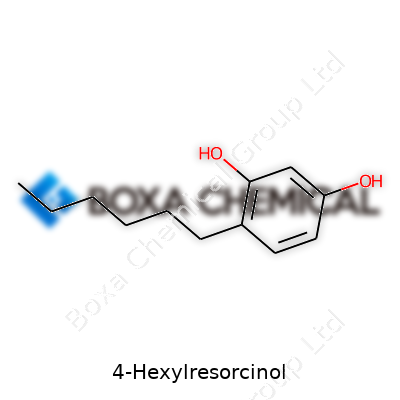
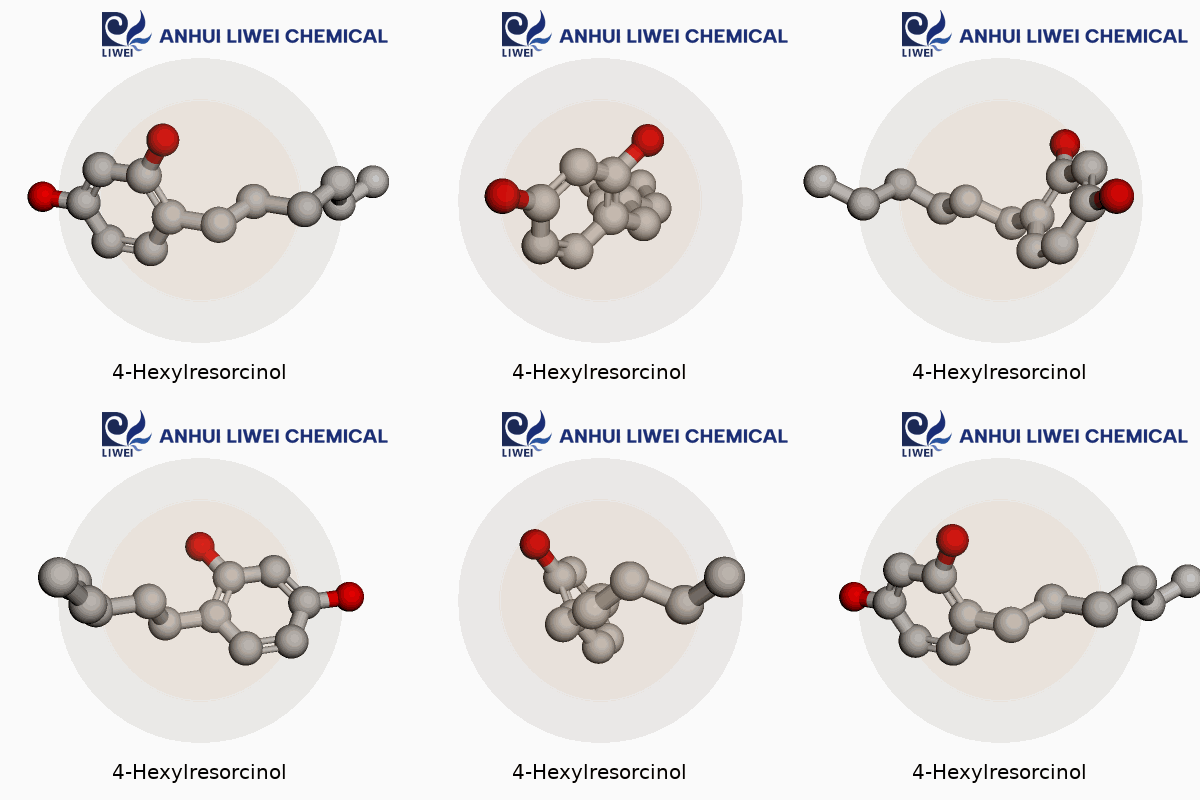
| Names | |
| Preferred IUPAC name | 4-hexylbenzene-1,3-diol |
| Other names |
4-n-Hexylresorcinol 4-Hexyl-1,3-benzenediol 4-Hexyl-1,3-dihydroxybenzene p-Hexylresorcinol |
| Pronunciation | /ˌfɔːrˌhɛksɪl.rɪˈsɔːrsɪnɒl/ |
| Identifiers | |
| CAS Number | 136-77-6 |
| Beilstein Reference | 1207939 |
| ChEBI | CHEBI:38421 |
| ChEMBL | CHEMBL1426 |
| ChemSpider | 54674 |
| DrugBank | DB11131 |
| ECHA InfoCard | 03bab8e0-0000-4d5d-aa9b-8460cedbcb1d |
| EC Number | 1.11.1.7 |
| Gmelin Reference | 9699 |
| KEGG | C06533 |
| MeSH | D006635 |
| PubChem CID | 5317 |
| RTECS number | VL3500000 |
| UNII | O13J2B907D |
| UN number | UN3077 |
| Properties | |
| Chemical formula | C12H18O2 |
| Molar mass | 194.28 g/mol |
| Appearance | White to off-white crystalline powder |
| Odor | Odorless |
| Density | 1.079 g/cm3 |
| Solubility in water | slightly soluble |
| log P | 3.8 |
| Vapor pressure | 1.8E-6 mmHg at 25°C |
| Acidity (pKa) | 9.5 |
| Basicity (pKb) | 13.86 |
| Magnetic susceptibility (χ) | -61.0·10⁻⁶ cm³/mol |
| Refractive index (nD) | 1.583 |
| Viscosity | Viscous liquid |
| Dipole moment | 2.79 D |
| Thermochemistry | |
| Std enthalpy of combustion (ΔcH⦵298) | -3782.7 kJ/mol |
| Pharmacology | |
| ATC code | D08AX04 |
| Hazards | |
| Main hazards | Causes serious eye damage. Causes skin irritation. Harmful if swallowed. |
| GHS labelling | GHS02, GHS07 |
| Pictograms | GHS07,GHS09 |
| Signal word | Warning |
| Hazard statements | H315, H319 |
| Precautionary statements | P264, P280, P301+P312, P305+P351+P338, P337+P313 |
| Flash point | 113°C |
| Autoignition temperature | 519°C |
| Lethal dose or concentration | LD50 (oral, rat): 370 mg/kg |
| LD50 (median dose) | LD50 (median dose): 640 mg/kg (oral, rat) |
| NIOSH | NMAM 3500 |
| PEL (Permissible) | PEL (Permissible Exposure Limit) for 4-Hexylresorcinol: "Not established |
| REL (Recommended) | 0.01% |
| Related compounds | |
| Related compounds |
Resorcinol 4-Propylresorcinol 4-Butylresorcinol 4-Octylresorcinol |




