
Researchers started paying closer attention to halogenated phenols like 4-bromophenol in the early decades of modern chemistry. Early records show that scientists experimenting with bromine in the late 19th century noticed unanticipated reactivity when bromine hit phenolic rings. Instead of dismissing these early bench-top surprises, chemists dug in, often driven by the need to understand how structure changes reactivity. While chlorinated phenols grabbed industry headlines, especially in pesticide and disinfectant circles, brominated versions like 4-bromophenol emerged as go-to intermediates for those who needed precision tweaks on aromatic rings. Labs started cataloguing their behaviors, not just out of curiosity but because each new derivative opened a door for dyes, drugs, and agricultural innovations.
Anyone who’s spent time with aromatic compounds appreciates the role of building blocks like 4-bromophenol. This off-white, sometimes pale yellow solid gets a lot of work as a reagent and intermediate. In practice, it often stands at the crossroads where chemists need both a reactive bromine handle and an available phenol group. Its relatively simple structure — a benzene ring, a hydroxyl group at position one, and a bromine atom at position four — belies its versatility. Bulk suppliers offer it at varying purities, often above 98% for lab use. Flasks of the crystalline powder show up on benches from textile R&D teams to pharma scale-up divisions.
A chemist who’s measured melting points knows 4-bromophenol always comes in reliable at about 68°C. The compound dissolves well enough in alcohol and ether, less so in water — that hydroxyl helps, but the bromine tips the balance toward organic solvents. With a molecular weight around 173 grams per mole, the compound’s density hits 1.7 g/cm³. That sort of heft means a little goes a long way in solution. The bromine pulls electron density from the ring, giving the compound a bit more acidity than its chloro or plain phenol cousins. In air, the solid powder sometimes turns yellow as it ages, a reminder that even stable compounds can react to light or oxygen if left unchecked on a shelf.
A closer look at vendor labels usually reveals a CAS number (106-41-2), chemical formula (C6H5BrO), and information on purity, often with less than 0.5% water and trace metals content listed. Some manufacturers rate lot-to-lot consistency on IR spectra or melting point range tests, because end-users hate surprises once a synthesis kicks off. On the safety side, European labels flag risk phrases for skin contact and inhalation, paired with guidance on storage – keep out of sunlight, lid tight, cool, and dry. Shipment paperwork almost always classifies it as hazardous because halogenated aromatics trigger tighter shipping rules, especially across international borders.
Lab chemists usually synthesize 4-bromophenol via direct bromination of phenol under controlled conditions. The real trick is steering the reaction so that bromine latches on at the para position instead of ortho. Cool temperatures, excess phenol, and a slow bromine drip — this process reads more like a careful kitchen recipe than brute-force chemistry. Sometimes, groups start with anisole, brominate that, then cleave the methyl ether to release the phenol. Both strategies keep side-products to a minimum and prioritize cost. In industry, continuous flow reactors or batch processes dominate, using hydrobromic acid or N-bromosuccinimide (NBS) for greater selectivity compared to elemental bromine.
NO2 groups, sulfonates, even more substantial substitutions can swing onto the phenolic ring after the initial bromine is placed. Cross-coupling reactions, like Suzuki and Buchwald-Hartwig, feed off the bromine’s reactivity, letting chemists extend the aromatic ring or attach more elaborate structures. The phenol group itself reacts in etherification, esterification, or can get deprotonated for nucleophilic attacks. Researchers attach bigger fragments for pharmaceutical leads, introduce tags for analytical probes, or convert it to less reactive ethers for specialty polymers. No matter the setting, the molecule stands ready to serve as a workhorse intermediate rather than a glamorous end product — and that’s where its real impact comes through.
Different catalogs reference 4-bromophenol as p-bromophenol, para-bromophenol, or 4-hydroxybromobenzene. Names like NSC 8123 or Phenol, 4-bromo- appear on older registry filings; tech data sheets from Asian makers may mix the order, calling it 4-bromo-1-hydroxybenzene. Shipping manifests sometimes just print its UN number or local regulatory reference, proof that globalization amplifies the tangle of names suppliers toss around. Chemists always check the CAS registry to dodge confusion with its ortho and meta isomers.
In any serious workplace, gloves and fume hoods come standard for handling 4-bromophenol. Safety data sheets warn about skin irritation, allergic reactions, or respiratory struggles for those who ignore the dust masks. I’ve watched teams accidentally knock a beaker off a bench — quick action and well-rehearsed spill procedures kept fallout minimal. Occupational standards point toward minimizing dust, labeling all storage, and training staff on eye wash and ventilation systems. Longer-term studies prompt some caution on regular exposure, but acute action plans focus on skin and lung protection — not because the chemical is the most toxic, but because workers benefit from strict habits learned early.
Pharmaceutical developers lean on 4-bromophenol as a core intermediate. The bromine acts like a chemical passport, letting medicinal chemists link pieces together during late-stage synthesis. Peptide tag makers value that phenol group for attaching to surfaces, while polymer researchers slide it into chains seeking new materials for coatings, electronics, or adhesives. Analytical chemistry teams use it as a reference, a derivatization agent, or a fluorescent label precursor. Agrochemical labs test brominated phenols in herbicide and fungicide workups, looking for traits that plain phenol can’t offer. Not every route lands in a final product, but the flexibility keeps this compound in steady demand.
Graduate students and process chemists experiment on new reactions by launching brominated phenols as starting points or probe molecules. Academic teams publish work on refining reaction conditions or coupling strategies to beat old-fashioned methods for site-selectivity and atom efficiency. Industrial players invest in greener preparative strategies, aiming to skip heavy metals or cut organic solvent footprints during scale-up. Scientists focus on lifecycle impact; those in regulatory and EHS roles chase after routes that minimize exposure and waste. Every incremental gain — more yield, safer quench, better recycling — feeds back to a wider adoption in both basic and applied research circles.
Toxicologists track the fate of phenolic bromides in living systems and the environment. Most toxicity reviews flag skin, respiratory, or gastrointestinal irritation at higher exposures. Longer-term animal studies have checked for carcinogenicity, with current data suggesting caution but not sounding the loudest alarm compared to heavier halogenated phenols. Some water quality teams test for bromophenol runoff, tying it to disruptions in aquatic life or bioaccumulation in plants. Lab experiments underline that gloves and goggles mean more than just bureaucracy — trace levels add up, especially for repeat users. Regulators rely on these findings to tighten protocols, reminding teams that workplace vigilance remains as relevant as ever.
The drumbeat for greener chemistry will nudge 4-bromophenol production and use toward better solvents, tighter mass balances, and higher process safety. Startups eye bio-derived aromatics for possible feedstocks, but reproducibility, cost, and regulatory acceptance mean traditional syntheses will stick around until disruptive change hits. Continuous flow reactors might shrink plant footprints and improve worker safety. Research could spin off new modifications, finding 4-bromophenol at the heart of materials that manage light, conductivity, or biodegradability. The quest for sustainability will challenge both chemists and suppliers to rethink energy usage, emissions, and end-of-life disposal, keeping this intermediate relevant for years to come.
Most people never hear about 4-Bromophenol outside a chemistry class, but it walks into more corners of life than most realize. I remember my first encounter with this compound in a university lab, wearing goggles and nervously measuring out pale crystals. Beyond that sterile bench, 4-Bromophenol fuels projects for pharmaceutical chemists, environmental analysts, and those solving puzzles in chemical synthesis.
Today, synthetic chemistry leans on building blocks like 4-Bromophenol. This compound carries a bromine and a hydroxyl group, which chemists swap and tweak as they stitch together complex drugs. Picture crafting an antibiotic or testing out a new anti-inflammatory. The journey often starts with a few simple, reliable molecules. 4-Bromophenol stands out here because it lets scientists attach different groups in precise spots. The impact? Shorter, safer syntheses, fewer toxic steps, and more efficient drug discovery efforts. Major pharmaceutical companies keep it stocked for creating both new medicines and research tools.
My interest in environmental science grew after working on a project tracking pollutants in water systems. 4-Bromophenol doesn't usually get water pollution headlines, but it serves as a chemical tracer in environmental analytical labs. Specialists spike samples with a dash of this compound, then trace how pollution moves or changes. The sharp, distinct signature of 4-Bromophenol lets scientists spot tiny amounts among crowded chemical backgrounds. This ability means analysts get solid answers about where contamination starts and how cleanup works, helping communities hold polluters accountable.
In toxicology research, 4-Bromophenol sometimes helps test water and soil for breakdown products of bigger, more toxic chemical families. The compound’s behavior in test reactions reveals information about broader chemical risks. I saw a team use it to mimic how certain wastewater treatments react with chlorinated and brominated organic molecules—processes that matter for both public health and regulatory agencies trying to keep drinking water safe.
The world of material science borrows from 4-Bromophenol’s stable structure. Researchers reach for it when building specialty polymers, dyes, and optical materials. If you walk through a factory assembling displays, some of those bright, resilient plastics might have started from compounds like this. The reason for its popularity: it lets chemists carefully build up complex frameworks, adjusting light absorption or adding conductive properties for devices like sensors and flexible electronics. Crafting these products comes down to reliability and the chance to scale up novel lab inventions into real-world goods.
Anytime you deal with a halogenated phenol, you need to treat it with respect. I learned early to check for up-to-date safety data before handling anything volatile or reactive, especially in teaching labs and manufacturing environments. Careful labeling, safe storage, and good ventilation all support worker health and community safety. Reliable quality standards for 4-Bromophenol aren’t just a paperwork exercise—they underpin trustworthy results and safer working conditions.
Using compounds like 4-Bromophenol responsibly ties together scientific progress, safety, and ethics. Open communication between researchers, suppliers, and regulators means fewer surprises down the line. By maintaining honest data about safety risks and environmental impact, chemical manufacturers help scientists keep their promises to society and the planet. That’s the kind of work that leaves a positive mark, even if most people never see the crystals themselves.
Ask anyone who has spent time in a chemistry lab, and they’ll tell you: it feels good to pinpoint a compound’s molecular formula. 4-Bromophenol goes by the formula C6H5BrO. That might seem like a jumble to folks outside of science, but those numbers and letters tell a real story.
I remember prepping solutions in college organic chemistry with phenol derivatives. Even a slight change in structure, like swapping a hydrogen for a bromine atom, completely reshaped how the molecule would behave. 4-Bromophenol holds six carbon atoms, five hydrogens, one bromine, and one oxygen. Swap any of those and suddenly the outcome shifts for researchers and manufacturers alike.
4-Bromophenol specifically draws attention because you see it pop up in research around pharmaceuticals, dyes, and disinfectants. Having a bromine at the fourth position of the ring doesn’t just change the name–it changes the chemistry. Its reactivity, its usefulness as a building block, even its risks, all tie back to that neat, compact formula.
The number one thing hammered into me as a young chemist: double check the structure. If the formula is off, projects spiral. It’s not just a textbook worry. Let the formula slip and you can lose time, waste money, and even risk safety. I’ve seen costly mistakes trace back to a single misread symbol. Take bromine, for instance. One wrong spot and now you’re working with something that could irritate skin or worse. Oxygen, a tiny "O," often flips a molecule from flammable to stable or vice versa.
Each part of C6H5BrO isn't just academic. The six carbons? That gives it the backbone of a benzene ring, which forms the skeleton for tons of other chemicals. The bromine? A heavy atom that changes how the molecule reacts, making it handy in certain syntheses. One oxygen? That anchors a hydroxyl group, bringing acidity and solubility properties that draw the attention of scientists in both industry and academia.
Plenty of professionals have stories of how a missed atom, or a slipped decimal, sent production off the rails. The molecular formula isn’t just about memorizing letters—it’s about protecting processes and people. Labs that keep the basics straight prevent bigger headaches down the line. It’s a safety thing as much as a knowledge thing. If I had a dollar for every time a new student asked, “Is this the right phenol?” it’d prove how these fundamentals matter.
Knowing the molecular formula, C6H5BrO, lets suppliers, labs, and researchers make informed choices. Regulatory agencies rely on it when approving safety sheets. Drug developers need the precise details when checking for byproducts or contaminants. Even something as simple as labeling a bottle in storage comes back to getting the structure right. If you’re not careful, confusing 4-bromophenol with a structurally similar chemical creates risk, wastes effort, and hurts reputations built on getting the facts right.
So much scientific progress—even major breakthroughs—stand on the simple facts represented by a formula like C6H5BrO. No matter how advanced our technology gets, attention to molecular details keeps chemistry practical and safe. It’s a lesson worth passing along, both for professionals and for anyone just starting down the science path.
4-Bromophenol stands out as a simple phenol with a bromine atom attached. In my days chasing chemical formulas for the lab, that name came up every now and then, mostly as a building block for dyes or drug research. Some people see it as just another chemical in storage, but ignoring the risks linked to it doesn’t do anyone any favors.
Even a quick review of the toxicology data shows why lab technicians treat 4-Bromophenol with care. Skin and eye irritation pop up in reports on acute exposure. Get it on your hands, and you’ll likely end up with redness or itching. Get it in your eyes, and there’s a good chance you’re headed for a rinse at the eyewash station. The compound isn’t shy about its strong odor, either—it immediately triggers that “chemical caution” instinct we all get someday in a lab coat.
Animal studies contribute another point of concern. Rats dosed with similar brominated phenols displayed signs of toxicity affecting the central nervous system, liver, and kidneys. There’s no reason to believe humans are magically exempt from these effects, especially during repeated or prolonged exposure. No wonder chemical inventories slap hazard pictograms on its label—acute and chronic risks exist if you go in unprepared.
It’s not only about individual health, though. My time following waste management protocols made it clear: 4-Bromophenol doesn’t just vanish after a spill. Phenols, especially with halogen atoms like bromine, stick around in soil and water longer than you’d hope. Environmental studies have measured this compound lingering in industrial wastewater, where its presence puts aquatic organisms at risk. Fish and invertebrates exposed to phenols often wind up with impaired growth or even fatalities, signaling real ecological consequences beyond the lab walls.
Scientists found degradation slow in anaerobic conditions, letting the material linger in places where oxygen is limited—think sludge or marshy sediments. This sets up the kind of scenario where wildlife faces ongoing threats, even if humans moved on long ago. From an ecosystem viewpoint, that spells danger downstream and up the food chain.
There’s no benefit to playing loose with handling rules. During internships, I quickly learned that direct contact with 4-Bromophenol could be avoided using simple but effective steps—nitrile gloves, sealed fume hoods, and careful cleanup. Splashy gloves or old, cracked goggles belong in the trash, not on anyone’s face. Spill kits and properly labeled containers protect more than just the current team. They ensure that nobody down the line has to guess if that faintly pink liquid is dangerous or not.
Ventilation also deserves a spotlight. The vapor from 4-Bromophenol hangs in the air, and inhalation isn’t safe. A well-maintained workspace keeps the risks manageable. Mixing or disposing of 4-Bromophenol responsibly means working with established protocols—not dumping containers down the drain. Responsible handling now saves headaches (and health) later.
New regulations and green engineering solutions continue to show promise. Manufacturers who tweak their formulas to use less hazardous precursors cut risks at the source. Facilities can invest in treatment methods for phenol-heavy wastewater, protecting both workers and the surrounding environment. Even on an individual scale, asking questions and staying up-to-date with safety data sheets creates an informed workforce ready to call out risky practices before they spark trouble. Knowledge and vigilance turn the unknown into manageable risk, not a looming danger. There’s no heroism in cutting corners with hazardous chemicals, only in keeping everyone safe to see another day at the bench.
Bringing a reagent like 4-bromophenol into the lab introduces serious responsibility. Even after years in the field, handling everyday chemicals never becomes just another task on the list. 4-Bromophenol isn’t the most exotic compound, but its health and stability risks mean it deserves a full dose of respect.
This chemical’s popularity in synthesis comes with a dark side. It’s toxic if swallowed, inhaled, or absorbed through the skin. Plus, it has corrosive potential. A slip-up, a broken container, or leaving the lid off during a rushed clean-up session creates an exposure risk for everyone in the lab. Storing it properly isn’t just about following rules—it’s about protecting yourself and your teammates from harm that may not be immediately obvious.
Glass tightly sealed containers offer the best protection for 4-bromophenol. I’ve seen corrosion eat through metal caps, and plastic can sometimes interact with certain compounds, causing slow leaks or contamination. Humidity accelerates degradation, so a cool, dry, well-ventilated spot stays top choice. Most labs install flammables cabinets or chemical-resistant shelving to keep things in check.
Direct sunlight and heat create problems. 4-Bromophenol can slowly break down or generate fumes under those conditions. Years ago, a poorly stored sample in a window led to glass etching and a nasty clean-up. Keeping bottles away from windows, radiators, space heaters, and heat-producing equipment keeps the chemical stable and extends its shelf life.
A crystal-clear label helps everyone avoid confusion. Handwriting the purchase date, concentration, and supplier isn’t overkill. If the substance sits on the shelf for months, nobody remembers every detail after changes in staff. Outdated, illegible, or missing labels lead to mistakes—simple, preventable errors that can cost money and safety.
Adding 4-bromophenol to a digital or paper inventory list makes tracking easier. Regular inventory checks let everyone see what needs replacing and flag mysterious or unlabeled bottles. I’ve seen labs waste thousands dealing with leftovers because the origin could not be traced. A well-managed inventory works as a safety net.
Lab disasters often have roots in storage habits. During my first job, a forgotten bottle cracked after sitting next to an overpowered hot plate. That memory sticks—it set my expectations for how I treat everything, not just the “serious” chemicals. Over time, I started keeping spare secondary containment trays, checking bottle integrity every month, and teaching anyone who joined the group to treat every chemical with the same level of care.
Mix-ups often come from carelessness about organizing similar-looking containers together. I suggest clear separations and color coding, especially for chemicals with hazard overlap. Storing strong acids, bases, or oxidizers separately from organohalogens like 4-bromophenol limits reactions if a spill happens.
Simple solutions work best. Use the right containers. Check storage conditions often. Keep labels sharp. Control who accesses the storage area so only trained personnel handle potentially risky materials. Find small ways to make storing chemicals like 4-bromophenol safer, not just for yourself, but for everyone else in the space.
Careful storage of 4-bromophenol stops small mistakes from turning into disasters. Respect builds over time, and sharing your system boosts lab culture. Safe habits start with choices made the moment that first bottle arrives.
Most folks don’t spend much time fretting about the melting point of organic compounds. Still, anybody working in a chemistry lab knows details like this aren’t just technical trivia—they’re basic working knowledge. For 4-bromophenol, chemists often find themselves needing this number because it marks an important checkpoint, both for purity and safety. Reliable studies and well-established laboratory references give 4-bromophenol a melting point right around 70 degrees Celsius, sometimes listed as 69-72°C.
In chemistry, numbers aren’t just numbers. A precise melting point tells you plenty about what you’re working with. In my grad school days, I learned the hard way how just a few degrees can spell the difference between pure success and impure mess. A sharp melting point around 70°C shows that 4-bromophenol is relatively pure. If the sample starts melting much earlier or over a wide range, some contamination crept in during synthesis or handling. Simple tools like capillary tubes and an oil bath bring tangible proof to the textbook value. Watching those tiny crystals go from solid to liquid right at the expected number always gives a real sense of control over the experiment.
4-bromophenol doesn’t melt at room temperature, and that very specific melting point matters for practical reasons. If you store a solid chemical that turns to liquid above room temperature, you can plan your storage, transportation, and handling so accidents don’t happen. Inexperienced chemists face a surprising mess if a chemical starts melting unexpectedly due to room heat—contamination, spills, and exposure risk go up. Many labs keep a strict chemical log, but you also want team members to respect these numbers, not just scratch them into notebooks.
Pharmaceutical companies, specialty chemical firms, and research shops check melting points to make sure they’re delivering a product that does what’s promised on the label. Consistency matters for patents, customer trust, and regulatory paperwork. Deviating by just a few degrees from that 69–72°C window might alert a QA chemist to a supply chain or process hiccup. I’ve worked with labs that pull out random product batches for melting point checks. If something seems off, the whole batch can get held up, saving bigger headaches down the line. It’s not just bureaucracy; it’s smart risk management rooted in careful observation.
Digital readouts and automated melting point instruments bring slick precision, but errors still sneak into results through dirty equipment, moisture, or even the wrong sample label. Training newcomers to respect melting points as more than a number helps build good habits from the start. Institutions that invest in education and hands-on troubleshooting often get fewer safety incidents and more trust from their in-house experts.
The value assigned to the melting point of 4-bromophenol touches everyday work for anyone in the lab sciences. Reviewing batch consistency, monitoring chemical purity, and keeping both people and data safe all spin out from that number. Sharing this kind of practical focus honors both the textbook pros and the careful habits learned through years at the bench. Chemistry runs best when the details matter—and in small ways and large, melting points prove that out.
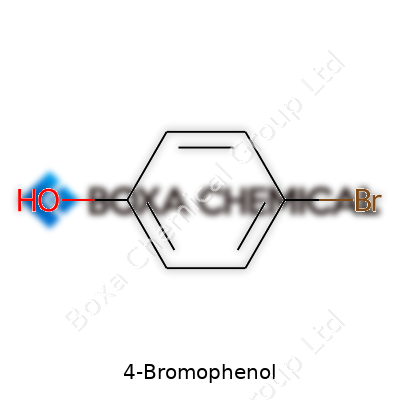
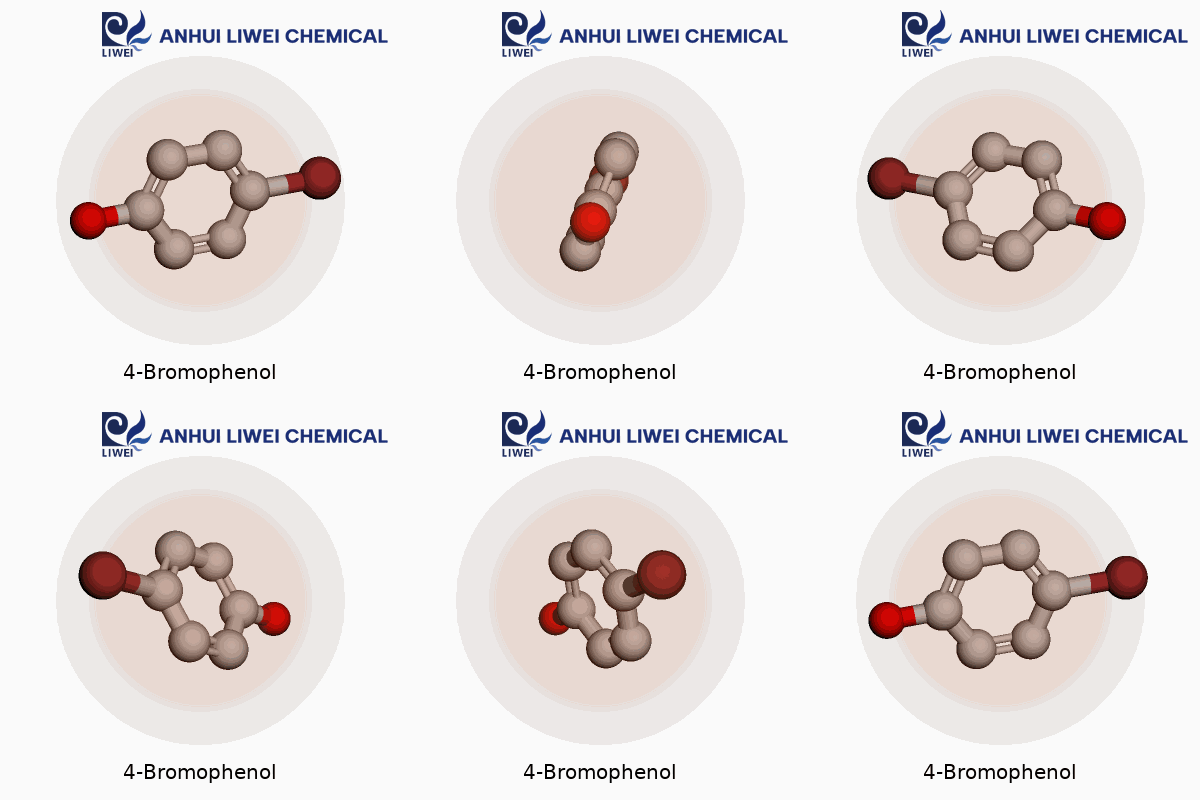
| Names | |
| Preferred IUPAC name | 4-Bromanylphenol |
| Other names |
p-Bromophenol 4-Bromohydroxybenzene p-Bromohydroxybenzene 4-Hydroxybromobenzene |
| Pronunciation | /ˌfɔːrˌbroʊ.məˈfiː.nɒl/ |
| Identifiers | |
| CAS Number | 106-41-2 |
| Beilstein Reference | 1209229 |
| ChEBI | CHEBI:41868 |
| ChEMBL | CHEMBL507 |
| ChemSpider | 7137 |
| DrugBank | DB02172 |
| ECHA InfoCard | 100.010.152 |
| EC Number | 4.1.1.1 |
| Gmelin Reference | Gmelin Reference: 83610 |
| KEGG | C01582 |
| MeSH | D001995 |
| PubChem CID | 8469 |
| RTECS number | BR4025000 |
| UNII | 0J7T3Q45UL |
| UN number | UN2821 |
| CompTox Dashboard (EPA) | DTXSID5020706 |
| Properties | |
| Chemical formula | C6H5BrO |
| Molar mass | 173.01 g/mol |
| Appearance | White to light yellow crystalline powder |
| Odor | Phenolic |
| Density | 1.65 g/cm³ |
| Solubility in water | 3.5 g/L (20 °C) |
| log P | 1.96 |
| Vapor pressure | 0.00117 mmHg (25 °C) |
| Acidity (pKa) | 9.2 |
| Basicity (pKb) | 9.35 |
| Magnetic susceptibility (χ) | -72.0×10⁻⁶ cm³/mol |
| Refractive index (nD) | 1.595 |
| Viscosity | 1.67 mPa·s (20 °C) |
| Dipole moment | 1.91 D |
| Thermochemistry | |
| Std molar entropy (S⦵298) | 87.0 J·mol⁻¹·K⁻¹ |
| Std enthalpy of formation (ΔfH⦵298) | -36.9 kJ/mol |
| Std enthalpy of combustion (ΔcH⦵298) | -3920.6 kJ/mol |
| Hazards | |
| Main hazards | Harmful if swallowed, causes skin and eye irritation, may cause respiratory irritation. |
| GHS labelling | GHS02, GHS07 |
| Pictograms | GHS05,GHS07 |
| Signal word | Warning |
| Hazard statements | H302 + H312 + H332: Harmful if swallowed, in contact with skin or if inhaled. |
| Precautionary statements | P261, P280, P302+P352, P305+P351+P338, P337+P313 |
| NFPA 704 (fire diamond) | 2-2-0 |
| Flash point | 134 °C |
| Autoignition temperature | The autoignition temperature of 4-Bromophenol is "660°C". |
| Lethal dose or concentration | LD50 oral rat 980 mg/kg |
| LD50 (median dose) | LD50 (median dose): 820 mg/kg (oral, rat) |
| NIOSH | B0187 |
| PEL (Permissible) | Not established |
| REL (Recommended) | REL (Recommended): 0.5 mg/m³ |
| Related compounds | |
| Related compounds |
Phenol 2-Bromophenol 3-Bromophenol 4-Chlorophenol 4-Iodophenol |




